

SPEED SKATING
USA seal fifth consecutive Team Pursuit Trophy on all-American day in Hamar
14 Dec 2025
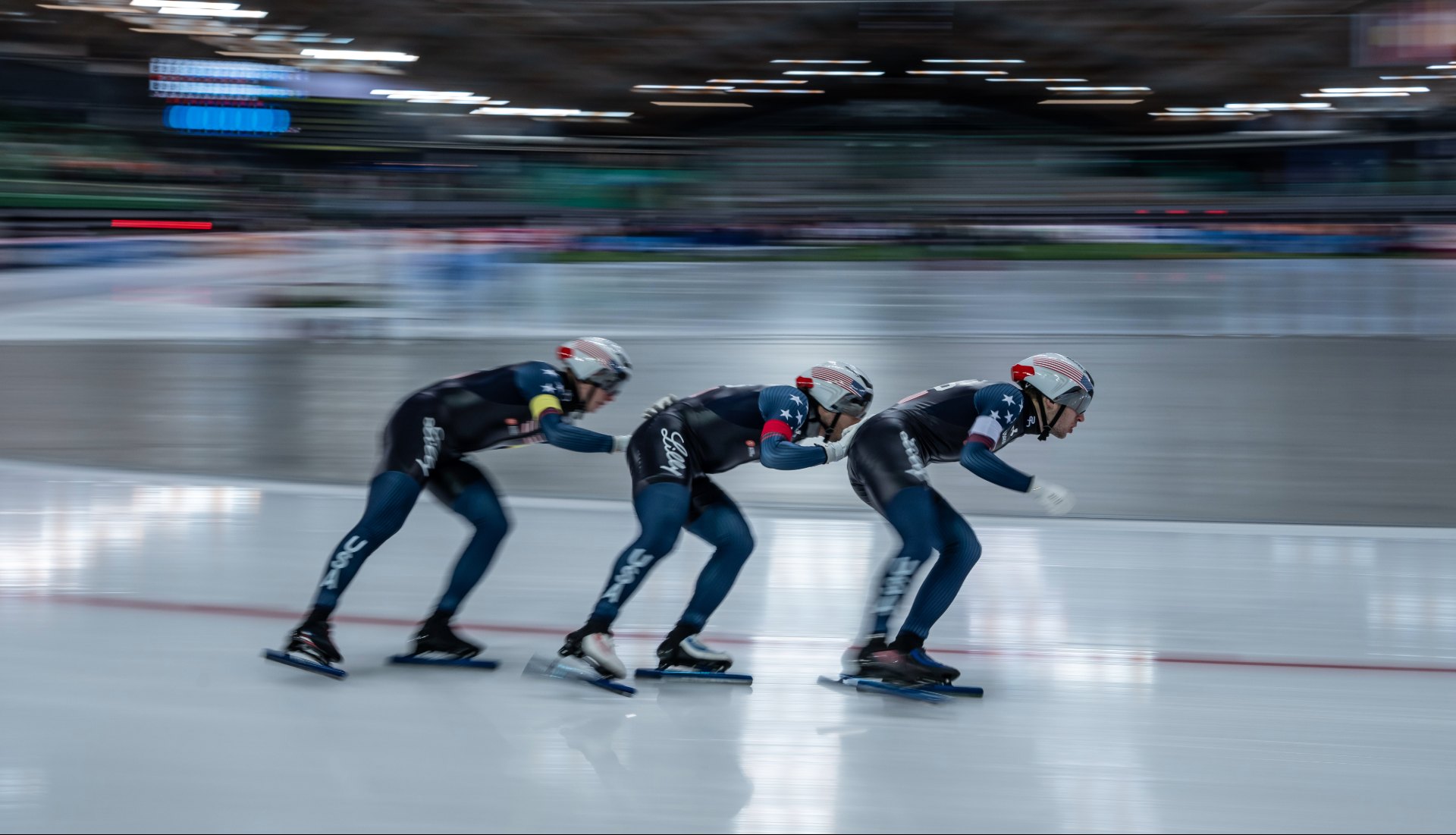
Casey Dawson, Emery Lehman and Ethan Cepuran have their pain train on track towards Milano Cortina in February. The USA Team Pursuit squad secured its fifth consecutive World Cup Trophy with a solid third gold medal in the last Team Pursuit race of the series in Hamar on Sunday.
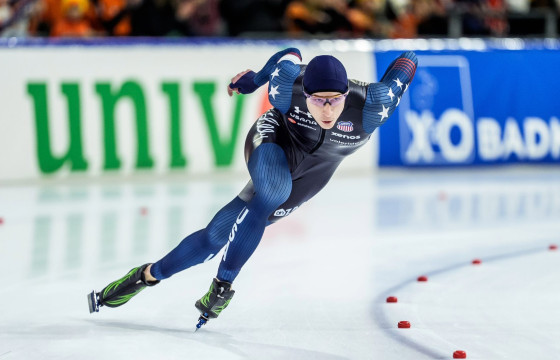
Jordan Stolz (USA) added two golds to his tally, with another gold in the 500m and his career first World Cup victory in the Mass Start. “If you can win all the other distances, you can also win this one,” Belgian Mass Start king Bart Swings said after finishing second.
Golden Team USA take nothing for granted
Finishing in a time of 3:40.28, Team USA ended up just outside the track record of 3:39.24 that they had set themselves at the World Championships last season.
“I think going into today, our goal was to go under the track record,” Lehman said.
“It was close for sure. Just the opener was too slow.”
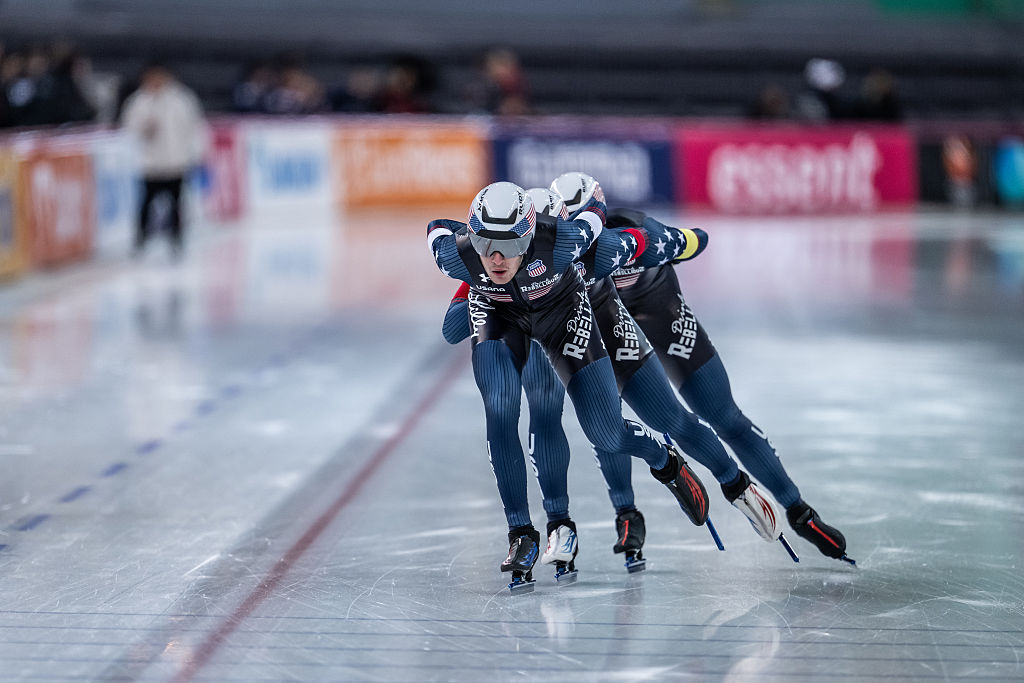
Casey Dawson leads out USA Pursuit teammates Emery Lehman and Ethan Cepuran as they take gold in Hamar and seal a fifth consecutive World Cup trophy. © ISU
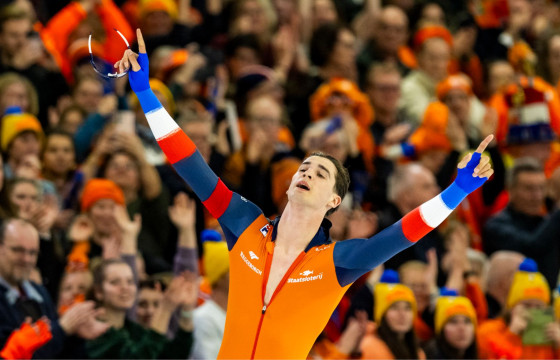
None of the other teams came close to the Americans’ time. Italy (Andrea Giovannini, Michele Malfatti, Davide Ghiotto) fell 2.32s short to take second place, and the Netherlands (Chris Huizinga, Marcel Bosker, Beau Snellink) were 2.76s slower in bronze.
In the World Cup final standings, the Dutch came in second with France (Timothy Loubineaud, Valentin Thiebault, Germain Deschamps) in third place.
Despite their big margin and their impressive streak of World Cup Trophy wins, the USA Team Pursuit men never take anything for granted, especially since they ended up with bronze after going into the 2022 Beijing Olympic Games as favorites.
Dawson, who said he was a bit fatigued at the Hamar World Cup, explained the need to avoid complacency.
“Everyone's so competitive, anyone can come out of the woodwork at the Games, and now we're just trying to be consistent, stay on top,” he said.
“It's important not to be content with times like this, because it's going to be a lot faster at the Games. We know what to work on, and we know what to do the coming months to stay on top.”
Lehman added: “The Italians will do a lot faster, and probably the Dutch too. We're just hoping that our level will also increase at the same level that the other people do.”
Dawson, Lehman and Cepuran have a back-up teammate in Conor Mcdermott-Mostowy (USA) if anything does go wrong ahead of the Games. For Stolz, joining the Team Pursuit is not an option because it might affect his 1500m race the next day.
“I think he’s got bigger fish to fry,” Lehman laughed.
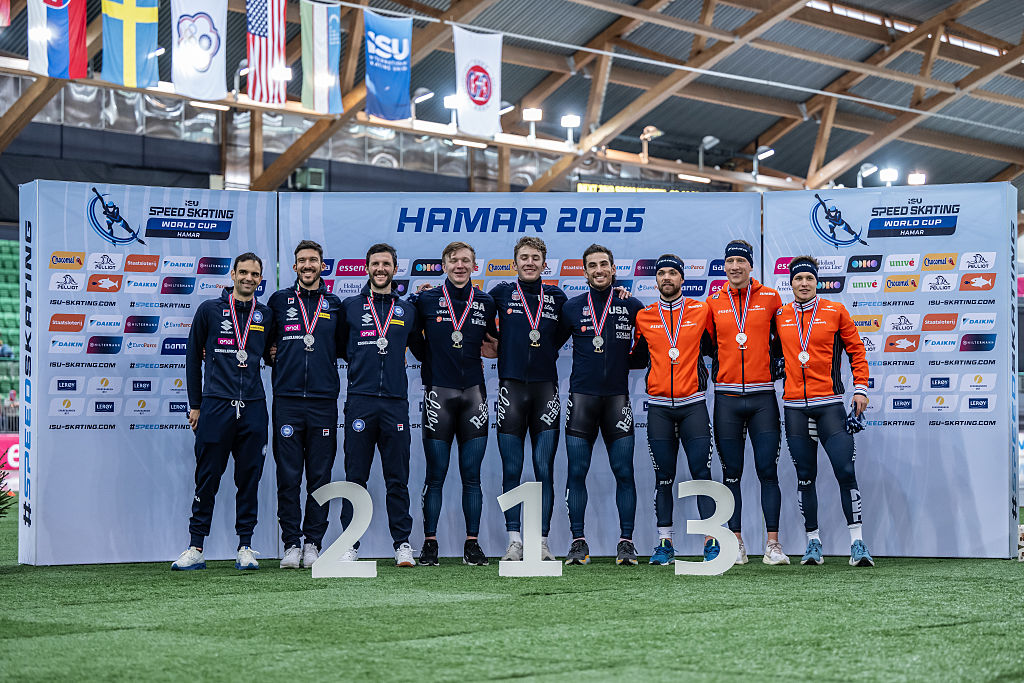
Italy (left) and the Netherlands (right) took silver and bronze behind the dominant Americans as thoughts turn towards the Olympic Games. © ISU
Dutch coach Rintje Ritsma agreed with Lehman that his team would be able to skate a lot faster in the months to come.
“If you see the level of our individual skaters at the moment, considering that they will all improve [during the season], we are not that far off. If they are in better shape, we can compete for the podium in Milano Cortina.”
The Dutch are one of the few teams left to change their front skater instead of maintaining the pushing strategy throughout the entire race.
“We lose too much at the beginning,” Ritsma explained. “It costs Chris [Huizinga] too much energy to get it up to speed and Marcel [Bosker] gets up to speed quicker. That’s why we chose to change up.”
Zurek runs Stolz close in 500m
In the 500m, Stolz took his fourth gold of the weekend, but the margin was tight. In the penultimate pair, Damian Zurek (POL) was able to chase down the American on the back-stretch to catch up with him in the second inner corner, but the Polish sprinter lost the edge in the final meters.
Both skaters clocked 34.14s, but Stolz got the win by a 0.001s margin.
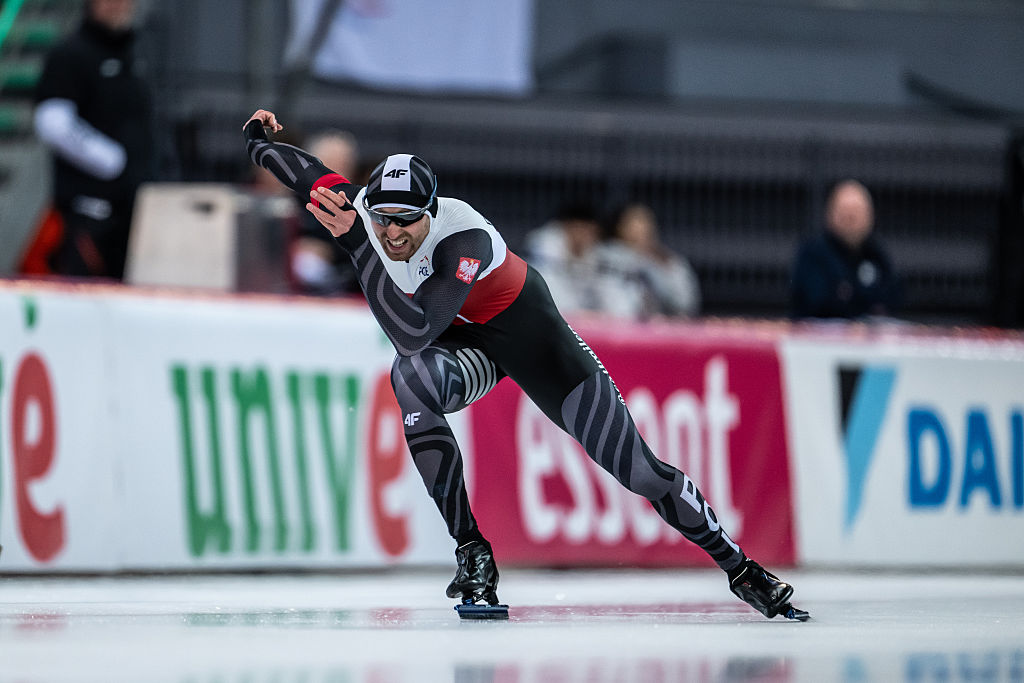
Damian Zurek (POL) came closer than anyone to denying Jordan Stolz (USA) gold this weekend, taking 500m silver by just 0.001s. © ISU
Zurek said: “It was the first time that I got in this situation [chasing Jordan Stolz on the back-stretch]. I was super-happy to race against him. The second inner corner was really good for me, but then I made a few mistakes in the last 50m.”
Stolz commented: “I was happy to beat him at the end, but he was faster in the ending, so that's more of a concern to me than him coming that close at the line.”
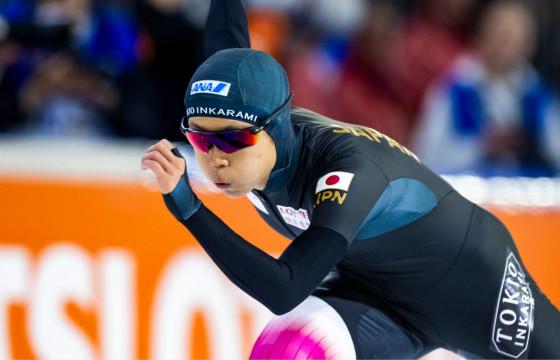
Three-tenths of a second behind Stolz and Zurek, Yuta Hirose (JPN) took his career first podium in third place. The 21-year-old from Japan is enjoying his first international season at senior level.
“It’s a big difference with Junior World Cups. The level is so much higher,” he said.
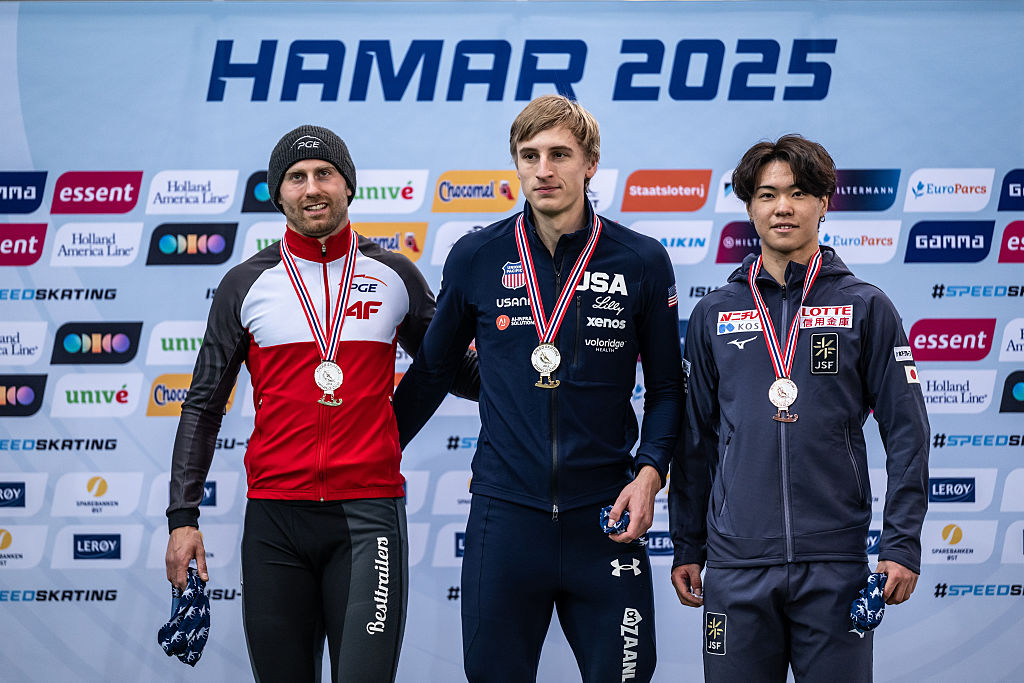
Stolz, center, was concerned with the speed of Zurek's finish as he held on to win his fourth gold of the Hamar World Cup. Rookie Yuta Hirose (JPN, right) took bronze. © ISU
The bronze medal gave Hirose a boost in his quest to make it into the Japanese Olympic team.
“I don’t exactly know the criteria for making the team, but it’s definitely a goal and this medal surely helps.”
Stolz makes it five in Mass Start
In the Mass Start, Stolz sealed a perfect weekend with his fifth gold medal, having already won two 500m races, the 1500m and the 1000m.
Stolz attacked with two laps to go and took it all the way to the end to finish about a second ahead of the sprinting pack with Olympic Mass Start Champion Swings taking silver and Andrea Giovannini (ITA) seizing bronze.
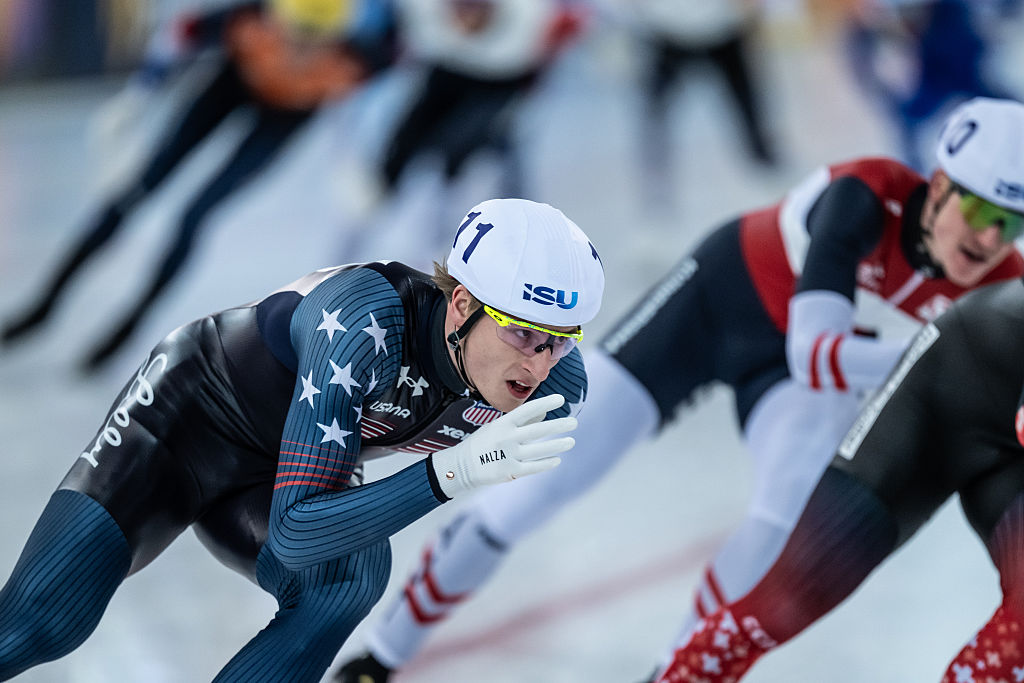
Stolz made it the perfect weekend by winning the Mass Start thanks to a well-timed attack two laps from the end. © ISU
Stolz explained how his breakaway came about.
“I was falling behind Metoděj Jílek (CZE), and I don't think everybody thought that I'd be able to get a little gap on them, but I just attacked at two laps to go. It was a little bit of a risk, but it worked,” he said.
“I saw the opportunity. I had nothing to lose anyway. I thought, if I attack here and I get caught, at least I tried.”
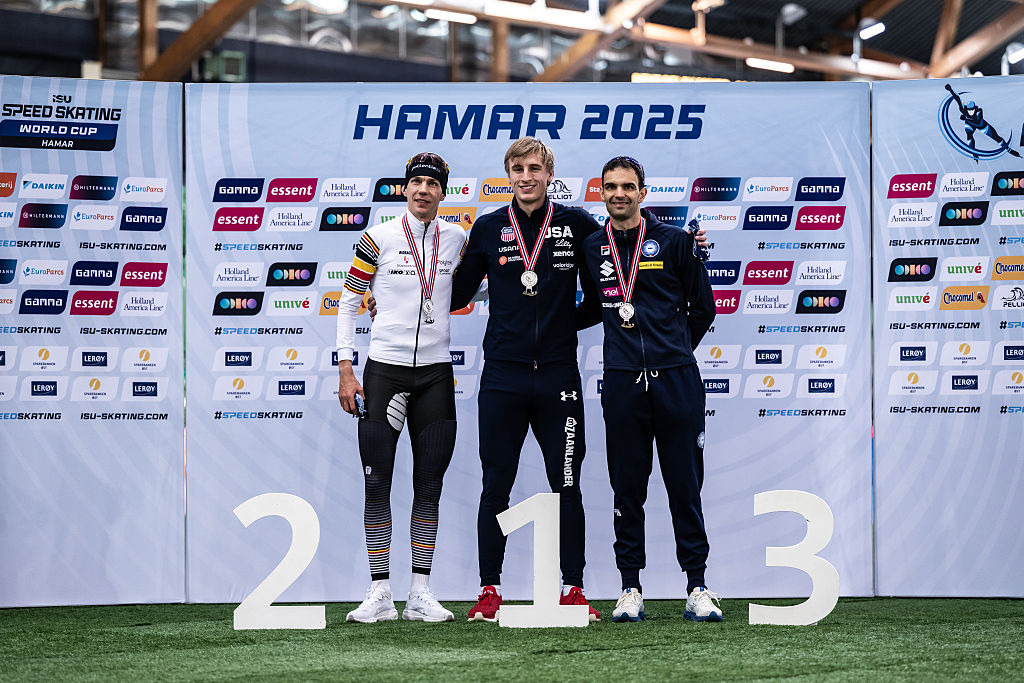
Olympic Mass Start champion Bart Swings (BEL, left) took silver after letting Stolz get away from the pack. Andrea Giovannini (ITA) won bronze. © ISU
Swings was satisfied with his own performance, although he regretted that he missed out on the opportunity to face Stolz in a bunch sprint.
“I was the best of the guys in the bunch sprint, but Jordan had slipped away earlier. He is superfast anyway and we’ve seen that he can play it smart,” said Swings.
“I hadn’t seen that it was him. I just caught up with a breakaway when a little group passed by and the difference in speed is just too high at that moment. From behind it’s difficult to distinguish Cepuran and Stolz, so I missed that opportunity. He played it smart and this shows that Stolz is very good.”
Poland win Mixed Relay as Germany take Trophy
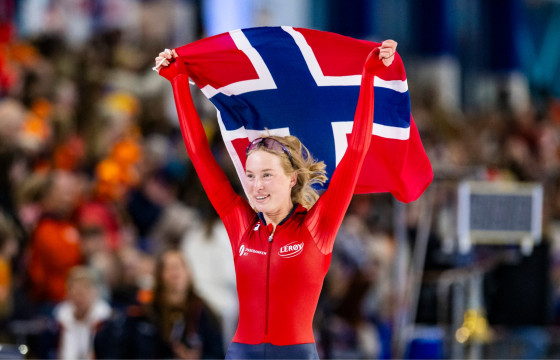
To conclude a busy Sunday in Hamar, Poland (Natalia Jabrzyk and Marcin Bachanek) edged out home country Norway (Julie Nistad Samsonsen and Bjørn Magnussen) to win the Mixed Relay event by a 0.05s margin. Austria (Jeannine Rosner and Gabriel Odor) came third just 0.07s further back.
Germany (Anna Ostlender and Moritz Klein) finished fourth and took home the World Cup Trophy.
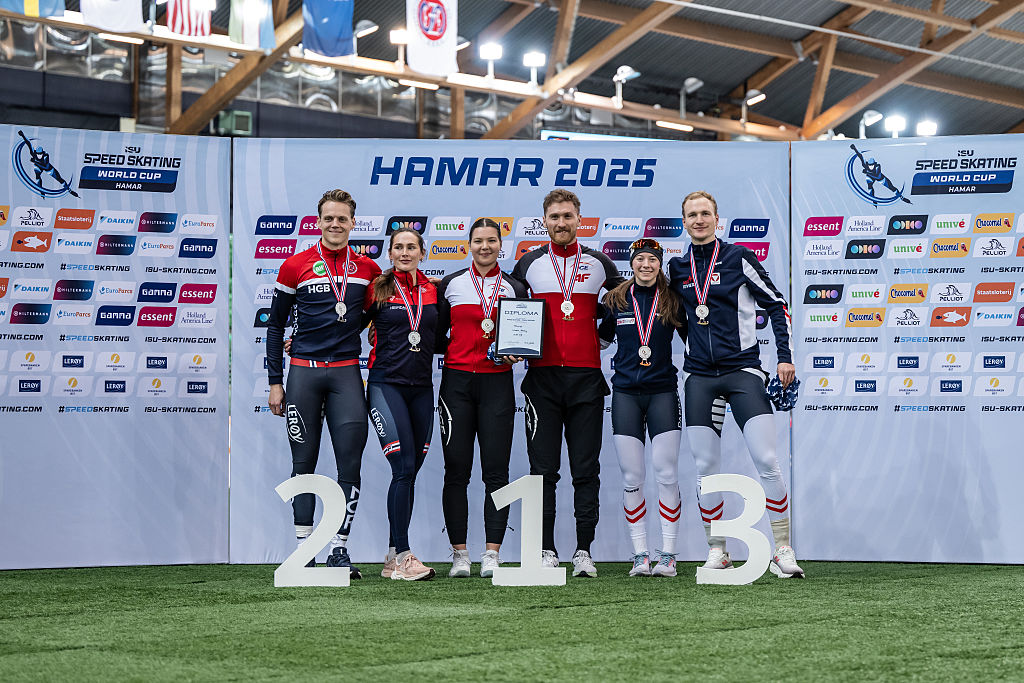
Poland's Natalia Jabrzyk and Marcin Bachanek (center) took the Mixed Relay gold ahead of home skaters Norway (left) and Austria (right). © ISU
Magnussen had enjoyed the race and the opportunity to win a medal in front of his home crowd.
“Sometimes it's really fun to race the Mixed Relay, like, today. We did a good race and had good exchanges,” he said.
“It's nice to have a mixed team event, skating at home track and getting a medal is big for us.”
Olympic qualification
The first four World Cups serve as Olympic qualification events. Speed skaters will earn quotas for their National Olympic Committees through the Special Olympic Qualification Classifications (SOQCS). Quotas will be allocated based on the SOQC Points ranking (based on points achieved at specific World Cup events) and the SOQC Times ranking (based on the best times per athlete achieved at specific World Cup events).
The maximum amount of quota places per NOC is nine skaters per gender. The quota places are determined by the SOQCS, and allocated to NOCs, not to individual skaters. There’s also a maximum amount of quota places per NOC in each distance at the Olympic Games.
For details on Olympic Qualification, click here