




SPEED SKATING
Olympic quota places, track records and Team Pursuit Trophy at stake in Hamar
11 Dec 2025
This week’s ISU World Cup in Hamar, Norway is the last of four events in which Olympic quota places are at stake. The Netherlands are the only country which seems to be on track for a maximum of nine quota places for both genders.
The Hamar World Cup is decisive for the Team Pursuit World Cup Trophy, because it’s the third and last time the event is on the program this season.
With most of the quota places secured, some World Cup leaders, such as Jutta Leerdam (NED), who tops the women’s 1000m standings, and Joy Beune (NED), setting the pace in the 1500m, have decided to skip Hamar to prepare for the Dutch Olympic trials which take place between Christmas and New Year’s Eve. The 500m rocket Femke Kok (NED), however, does compete in Hamar.
In the men’s competition, Jordan Stolz (USA) will be looking for revenge after his disrupted World Championships campaign on the same track last season.
Track records in jeopardy when Stolz arrives
Coming off the Heerenveen World Cup with three fresh track records in his pocket, Stolz seems to be unbeatable at the moment. The American phenomenon lost his 500m, 1000m and 1500m World titles in Hamar last year, when he was still suffering from the ramifications of pneumonia and strep throat.
In Heerenveen (NED), Stolz broke the 500m and 1000m track records set by Jenning de Boo (NED) previously. De Boo also holds the Hamar 500m track record and the Dutch runner-up in the 500m World Cup ranking will be eager to take up the battle with his American rival once more.
On Friday night, Stolz may have a go at the second-oldest track record at the Vikingskipet. In November 2009, Stolz’s former trainer and mentor Shani Davis (USA) skated 1500m in one minute, 44.27 seconds on the Norwegian ice.
The 1000m track mark was set by Joep Wennemars (NED) at last season’s World Championships, when Stolz had to settle for bronze. This season, Stolz has won all three 1000m races so far, with Wennemars collecting one bronze medal during that run.
Endurance specialists chase Kramer relic from the past
The oldest track record in Hamar may be at stake on Saturday night. Sven Kramer (NED) skated 6:09.74 in February 2009. With an extraordinary level and a deeper field than ever, many contenders in the men’s long-distance field may think it’s time to finally get rid of one of Kramer’s last relics.
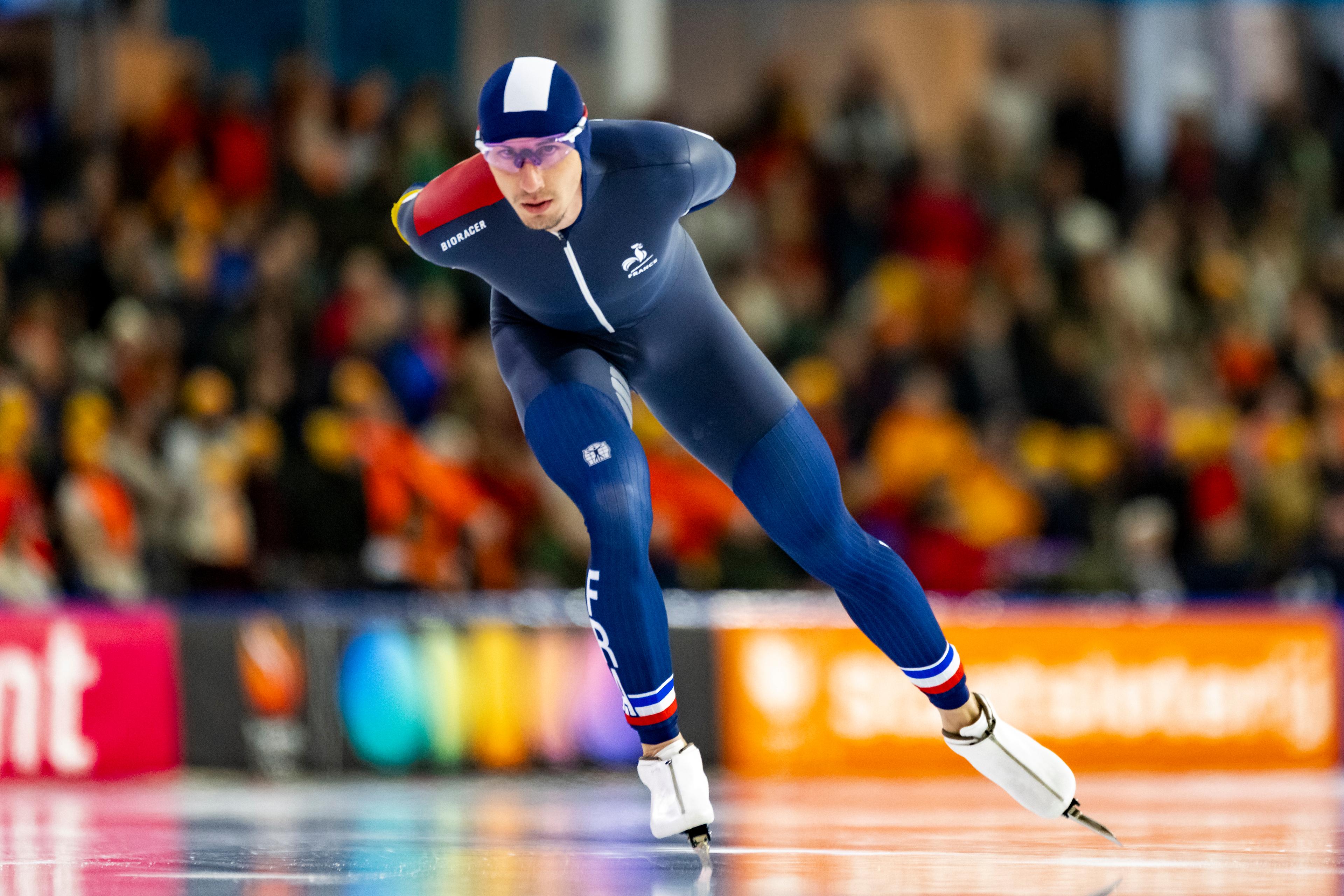
Casey Dawson (USA) broke an even older Kramer track record in Calgary at the second World Cup this year, while Timothy Loubineaud (FRA) set a world record in the 5000m a week earlier in Salt Lake City. The Frenchman leads the long distance World Cup, ahead of Metoděj Jílek (CZE) and Sander Eitrem (NOR), who won the 5000m World Title on home ice last season.
Vladimir Semirunniy (POL) may also be in the mix. After a disappointing spell et the two North American World Cups, the Polish endurance specialist set a track record in the 10,000m B Division in Heerenveen last week to get promoted to the long distance A Division in Hamar. He’ll have to make pace to conquer an additional quota place in the 5000m after he virtually secured his 10,000m ticket to Milan with the fastest 10,000m time of the season last week.
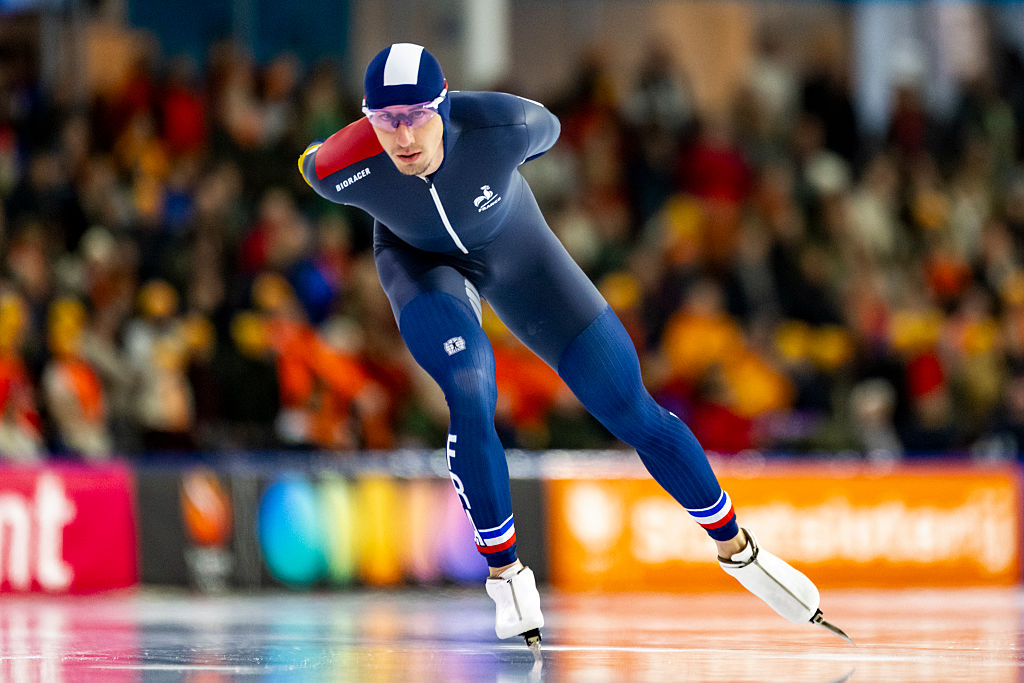
Timothy Loubineaud (FRA) competes at the recent ISU World Cup Speed Skating in Heerenveen, Netherlands © ISU
Kok hopes to extend 500m streak
Whereas Leerdam and Beune skip the Hamar World Cup, Femke Kok decided to skate in Norway. The fresh world record holder is on a seven-race winning streak in the World Cup, including last season, and she doesn’t want to miss out on a chance to add two more gold medals in the shortest distance this weekend.
Leerdam is second in the 500m World Cup ranking, with Marrit Fledderus (NED) third. Olympic champion Erin Jackson (USA) dropped to fourth place after failing to finish her race in Heerenveen due to a strained hamstring. She hopes to be able to compete again in Norway.
With Leerdam absent, the 1000m will probably be a battle between Kok and Miho Takagi (JPN), who took second place behind Leerdam in Heerenveen. Takagi is only 11th on the 1000m World Cup ranking because she skipped the distance at the first World Cup in Salt Lake City this season. Other contenders are third-ranked Bëatrice Lamarche (CAN), fourth-placed Brittany Bowe (USA) and Fledderus, currently fifth.
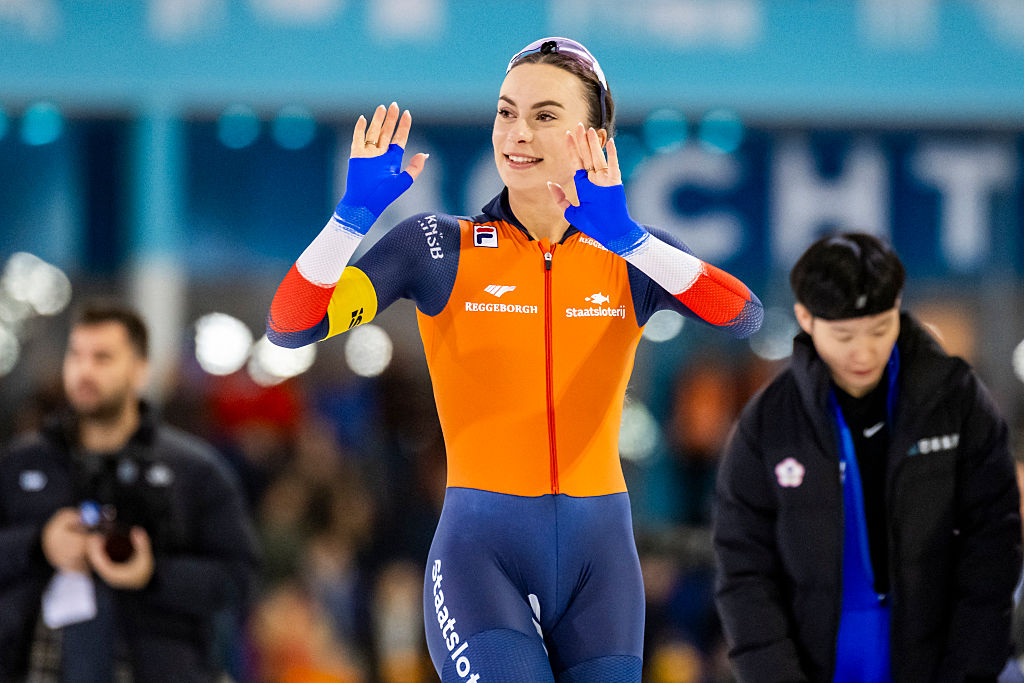
Femke Kok (NED) at the ISU World Cup Speed Skating in Heerenveen, Netherlands © ISU
Long distance battle for Wiklund and Weidemann
Absent Joy Beune tops the women’s long distance World Cup, leaving the field open to Ragne Wiklund (NOR), Isabelle Weidemann (CAN) and Valérie Maltais (CAN) to battle for 3000m gold at the Vikingskipet.
Wiklund and Weidemann took gold and silver in last week’s 5000m race in Heerenveen.
In the Mass Start, Marijke Groenewoud (NED) hit back with gold in Heerenveen after disappointing races in Salt Lake City and Calgary. The World Champion is ranked third in the World Cup, with Mia Manganello (USA) leading and Ivanie Blondin (CAN) in second.
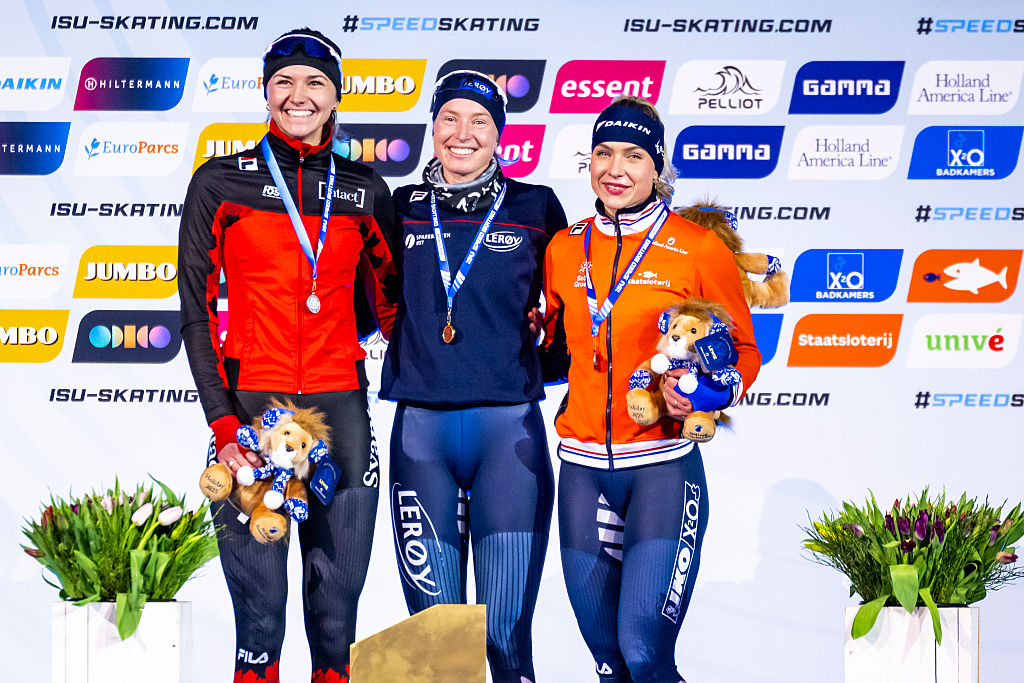
Long-distance medalists Ragne Wiklund (NOR, gold, center), Isabelle Weidemann (CAN, silver left) and Joy Beune (NED, bronze) in Heerenveen, Netherlands © ISU
Team pursuit battle between Canada and Japan
The women’s Team Pursuit should be a tight battle between Japan, Canada and, maybe, the Netherlands. Japan won the first race, and took bronze in the second, while Canada got silver twice.
The Dutch team fell apart to finish fifth in the first race, but returned to their World Championships winning line-up (Joy Beune, Antoinette Rijpma-de Jong and Marijke Groenewoud) to win the second.
With Beune absent, the Netherlands will have to improvise once more in Hamar, leaving the door open for Japan or Canada to take advantage.
In the men’s Team Pursuit, USA have been in a league of their own this season. They smashed their own World Record in Salt Lake City and beat the rest of the field by a 2.71s margin in Calgary. France, Norway, China and the Netherlands seem to be fighting for silver.
Olympic qualification
The first four World Cups serve as Olympic qualification events. Speed skaters will earn quotas for their National Olympic Committees through the Special Olympic Qualification Classifications (SOQCS). Quotas will be allocated based on the SOQC Points ranking (based on points achieved at specific World Cup events) and the SOQC Times ranking (based on the best times per athlete achieved at specific World Cup events).
The maximum amount of quota places per NOC is nine skaters per gender. The quota places are determined by the SOQCS, and allocated to NOCs, not to individual skaters. There’s also a maximum amount of quota places per NOC in each distance at the Olympic Games.
For details on Olympic Qualification, click here.


