

SPEED SKATING
Mass Start: spectacular, fast-paced, sometimes chaotic and always entertaining
20 Feb 2026
For more information about Speed Skating in the Olympic Winter Games Milano Cortina 2026, please check here.
It's the youngest of all Olympic disciplines in Long Track Speed Skating, but the Mass Start has rapidly become a crowd favorite. It's spectacular, fast-paced, sometimes chaotic and always entertaining, and the Men's and Women's Mass Start racing on Saturday will signal the end of the Speed Skating program at the Olympic Winter Games Milano Cortina 2026.
Winning the traditionalists over
When the Mass Start was introduced to the World Cup Series in the 2011/12 season, it was often labeled a 'circus act' by traditionalists in speed skating. To them, the classical time trial format skated in pairings was sacred.
But the circus act was there to stay. Skaters from not so traditional speed skating countries took up the challenge and the traditionalists gradually came to appreciate the spectacular event too.
The Mass Start made its Olympic debut at the PyeongChang Games in 2018, when Lee Seung Hoon (KOR) seized gold on home ice in Gangneung.
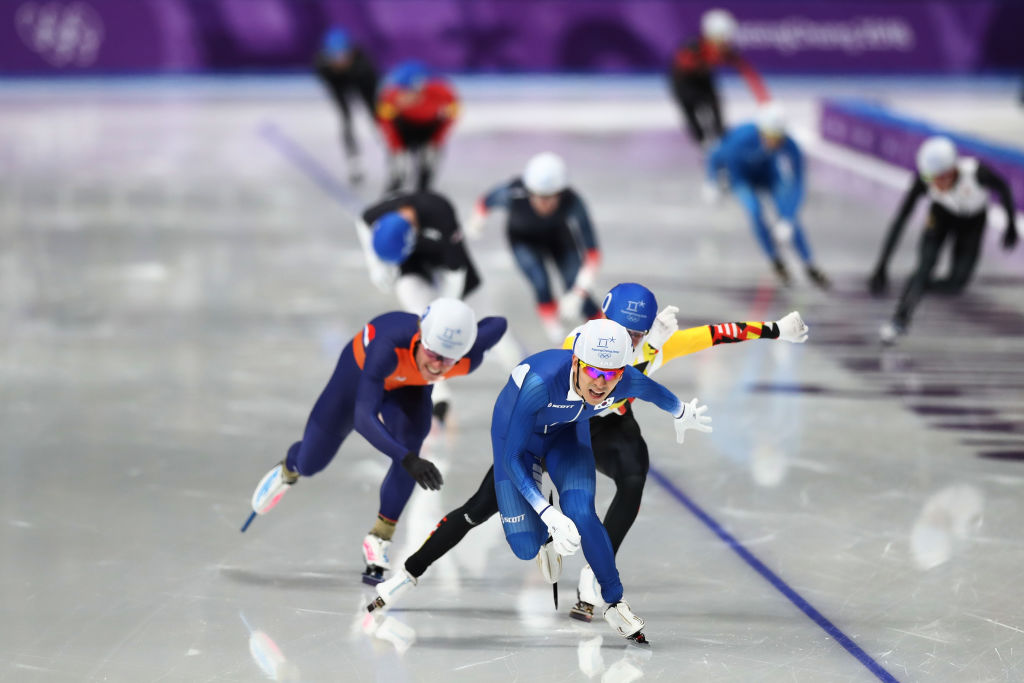 Lee Seung Hoon beats Bart Swings (BEL) and Koen Verweij (NED) to the line to win the first Olympic gold in the men's Mass Start at the PyeongChang Games of 2018 © Getty Images
Swapping wheels for blades
Apart from being a full-fledged Long Track event in its own right, the Mass Start also became a springboard for inline skaters who wanted to try their luck on the ice, often because the wanted to chase an Olympic dream as inline skating didn't feature the Olympic program.
Because inline skaters are used to pack-style racing, the Mass Start is a perfect entry-event onto the ice.
Francesca Lollobrigida (ITA), who won 3000m and 5000m gold at the Olympic Winter Games Milano Cortina 2026, is the perfect example. A Rome native, she grew up on inline skates and won multiple World titles on wheels before switching to ice in 2012 to chase an Olympic dream she had cherished since she had first set foot on the ice aged 17.
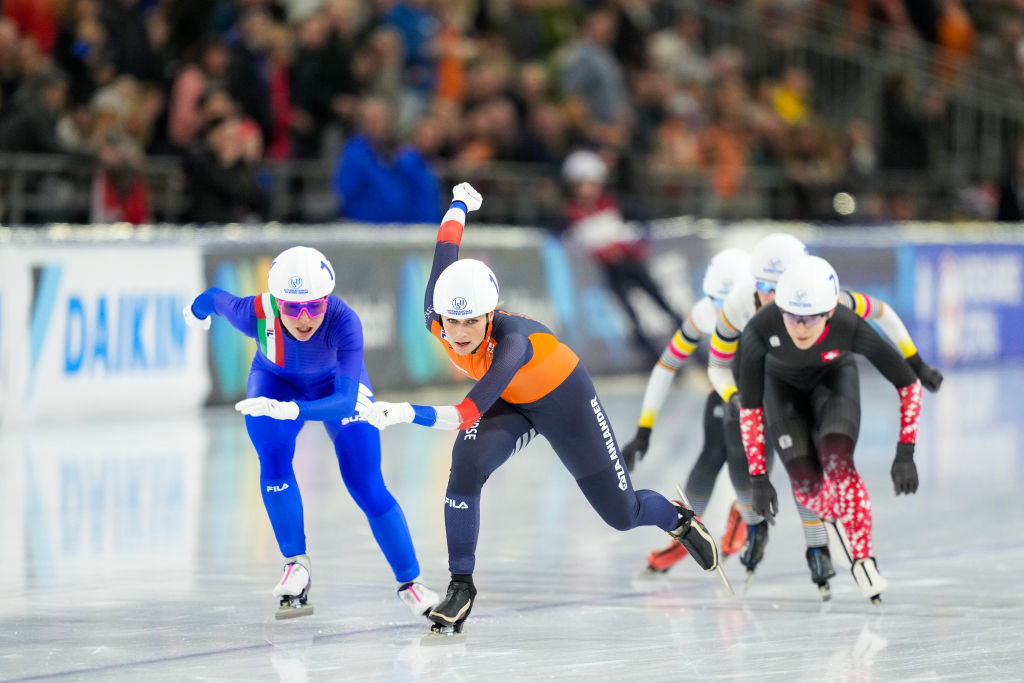 Francesca Lollobrigida (ITA, left) and Irene Schouten (NED, center) battle it out at the 2024 ISU European Championships © ISU
Lollobrigida became a specialist in the Mass Start events, winning the Mass Start World Cup in 2014 and 2018. After becoming European Champion in January 2018, she went to the 2018 Olympic Games as one of the favorites for gold, but she ended up seventh. It taught the Italian not to put all her eggs in one basket.
Four years later in Beijing she won Olympic bronze in the Mass Start and silver in the 3000m, and is finishing off her glorious career with two gold medals in Milan and the chance to add more silverware in her signature event on Saturday 21 February.
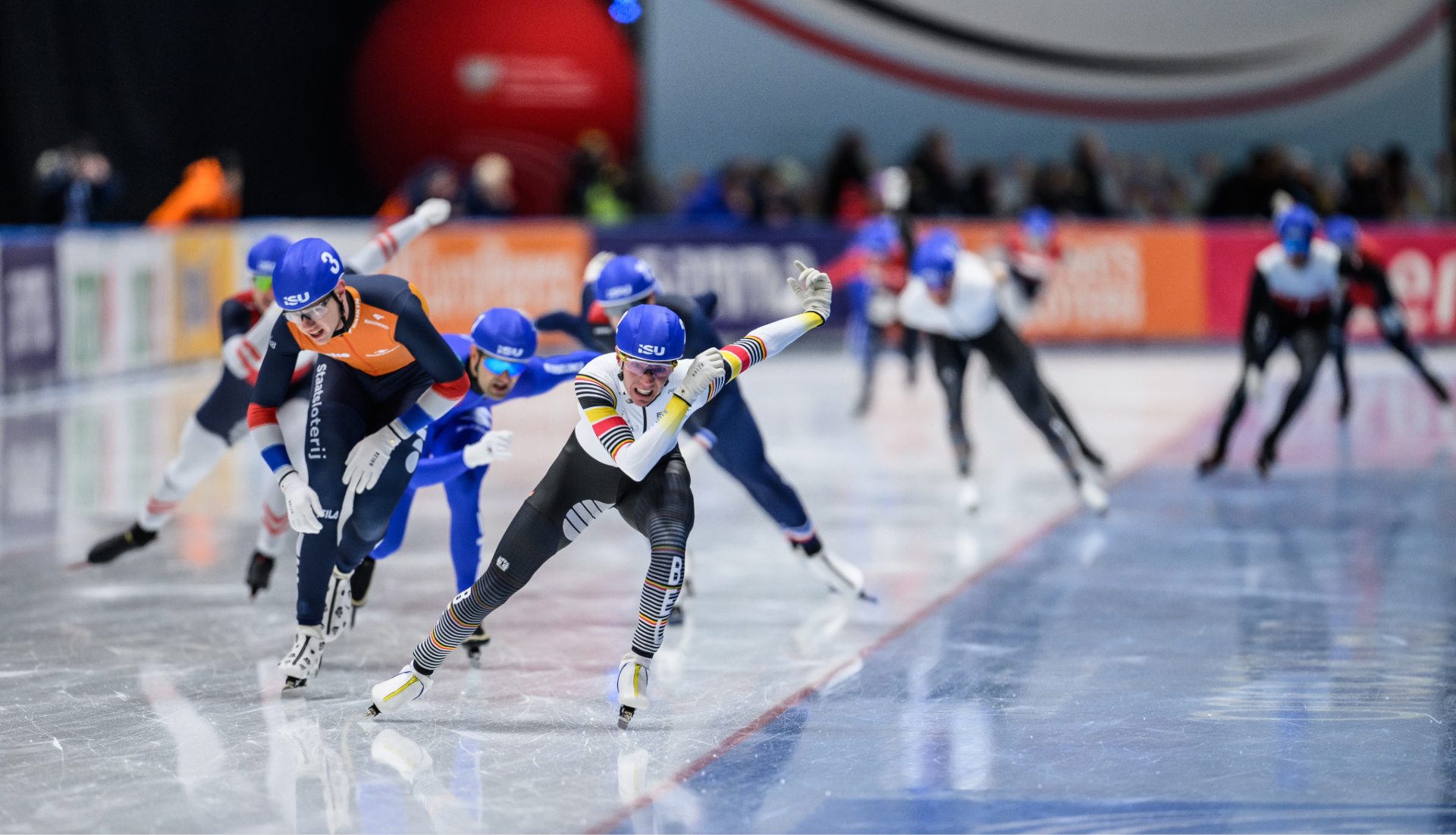
Other inline specialists who turned into Olympic gold medalists on ice are 2022 Olympic Mass Start Champion Bart Swings (BEL) - pictured top winning the 2026 ISU European Championships - and 2022 Olympic 500m Champion Erin Jackson (USA).
A different dynamic and a deep field
Jorrit Bergsma (NED) was one of the first skaters from 'traditional' speed skating country the Netherlands to embrace the Mass Start. Together with reigning Olympic Champion Swings, Bergsma is the only skater at the Milan Olympic Games to have competed in the first ever World Cup Race on November 25, 2011 in Nur-Sultan, Kazakhstan.
Bergsma was World Mass Start Champion in 2020 and he won this season's World Cup Trophy in the discipline. The 40-year-old Dutchman believes the Mass Start has come a long way since its introduction in 2011.
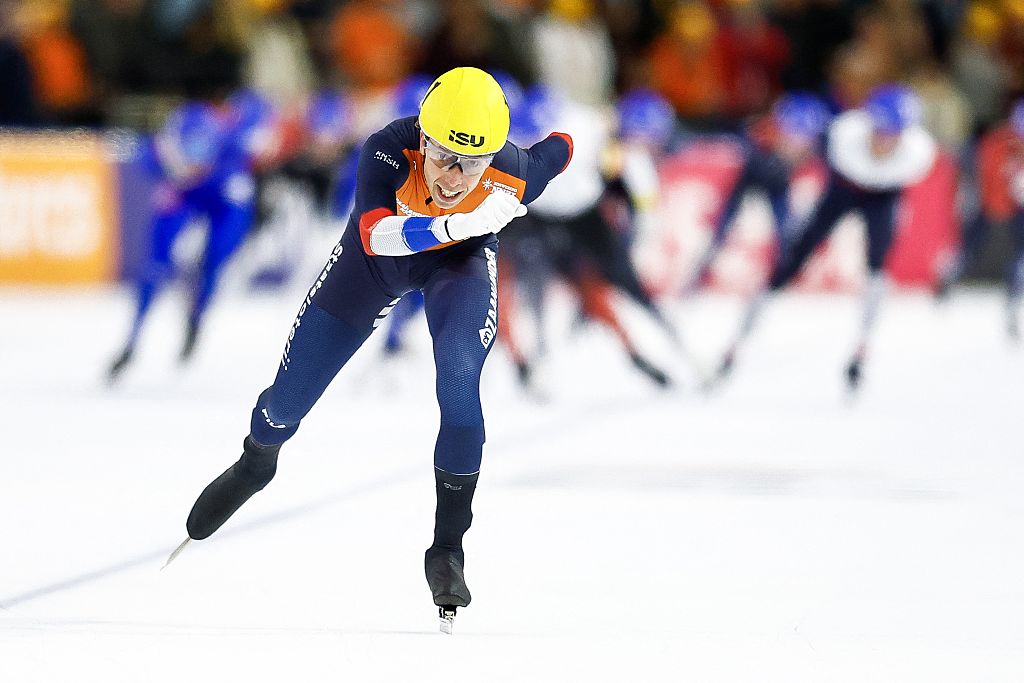 Jorrit Bergsma (NED) leads the field on the way to his World Cup Mass Start win in Heerenveen (NED) in December 2025 © Getty Images
"If you look at the start list there's so many good skaters, the field is so deep. This event has become very competitive,” he says.
"Back in the day you'd have Swings, Andrea Giovannini (ITA) and Joey Mantia (USA). Now there's not just sprinters but also guys who attack for a breakaway like Metoděj Jílek (CZE) and Timothy Loubineaud (FRA), guys who want to make it a tough race.
"The Mass Start is such a difficult event, not as straightforward as the classical distances, when the best skater wins if he does what he's capable of.
"In the Mass Start, when you're the favorite, you've got this target on your back and other skaters will look at you to put in the work. There's such a different dynamic to it."
Mass Start: the format
The Mass Start is a pack-style race over 16 laps, and the first skater to the finish line wins. Usually there are two semifinal races to bring the field down to 16 skaters for the final.
Apart from the finishing order after 16 laps, there are intermediate sprints every four laps. In these three intermediate sprints the first three skaters will gain 3, 2, and 1 points. In the final sprint, after 16 laps, the first six Skaters will gain 60, 40, 20, 10, 6 and 3 points. Note that the first three finishers in the final sprint cannot be surpassed based on points won in intermediate sprints.