

SPEED SKATING
Explained: Speed Skating Rules
26 Aug 2026
Speed Skating is pretty straightforward: whoever skates fastest wins. Yet there is an extensive rule book to ensure fair competition across the different race formats.
In this article, we explain the most important Speed Skating rules. While this guide is by no means all-encompassing, it should give you a better understanding of what is happening on the track.
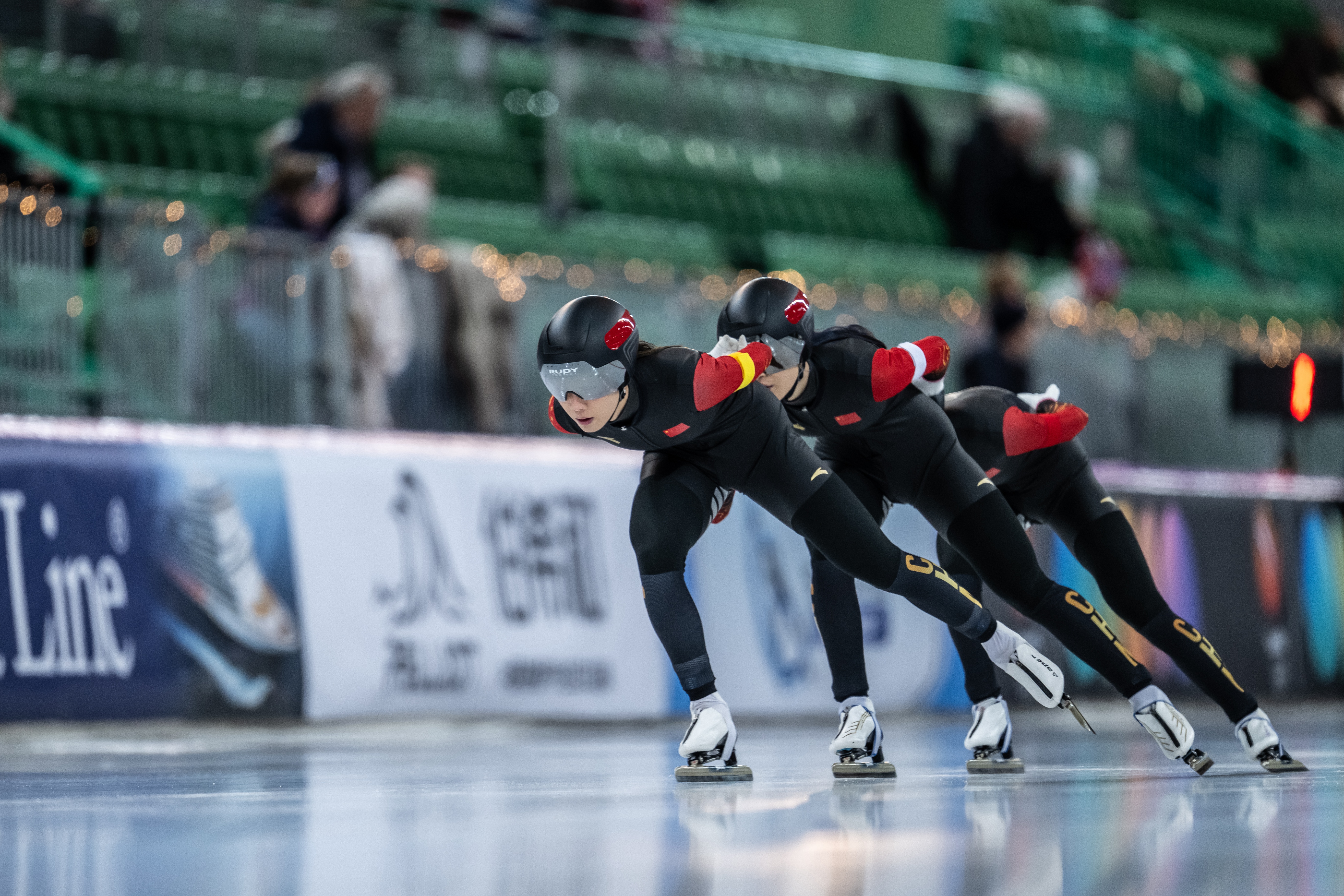
Team China competes in Women's Team Pursuit race at the ISU World Cup Speed Skating - Hamar in December, 2025 in Hamar, Norway. © ISU
Formats
Speed Skating has developed various formats since the founding of the International Skating Union in 1892. The sport started with the so-called classical distances, in which skaters compete in pairs against the clock. Team Pursuit, Mass Start, Team Sprint and Mixed Relay were later added to the programme.
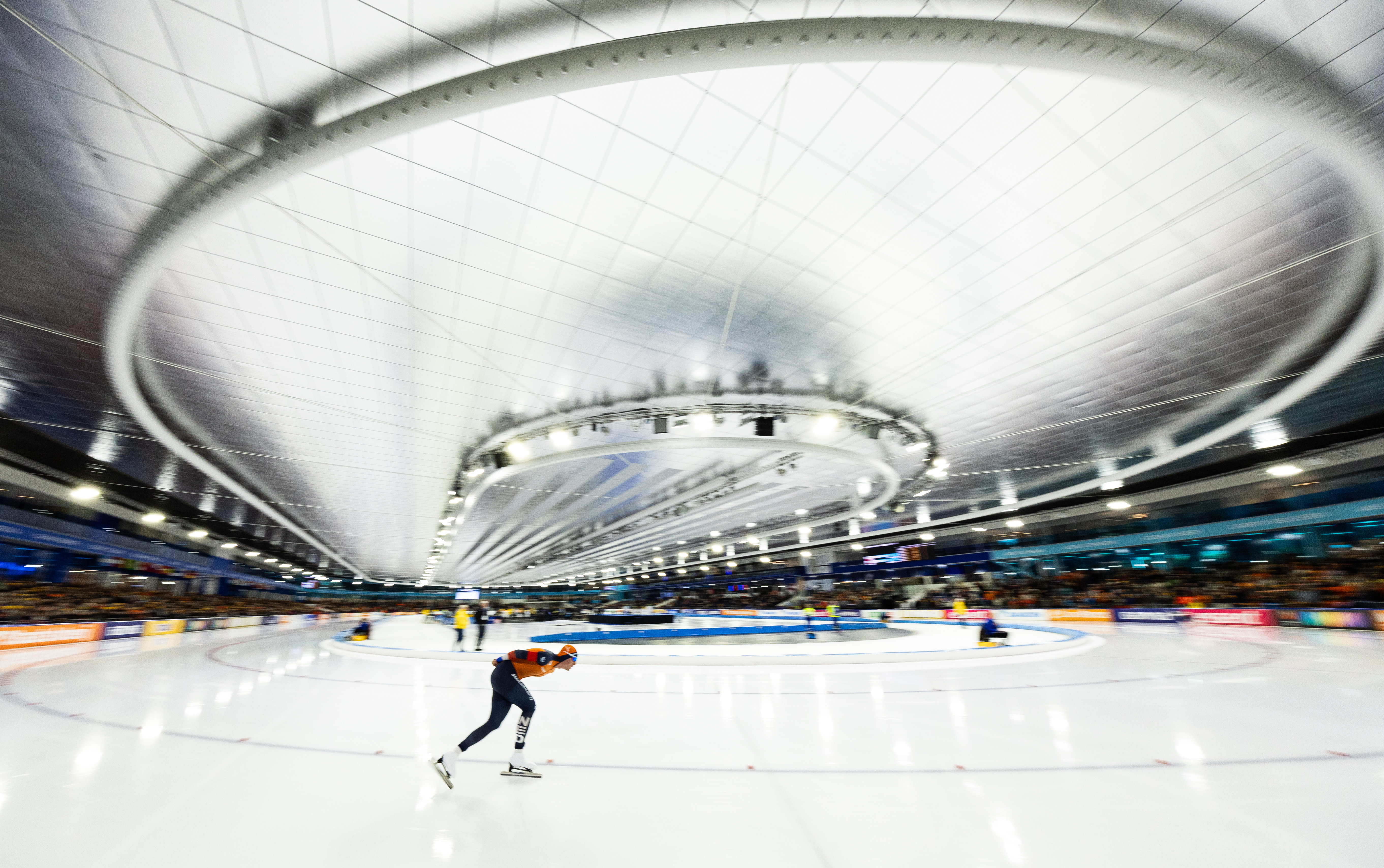
Beau Snellink performs in the 10000m Men Division A race at the ISU World Cup Speed Skating in December in Heerenveen, Netherlands © Getty Images
The Track
Speed Skating races are typically held on a 400-meter track featuring a warm-up lane on the inside and two competition lanes on the outside.
In the classical distances, skaters compete in pairs. One skater starts in the inner lane and the other in the outer lane.
The starting line varies depending on the distance. In the 500m race, skaters start at the beginning of the finishing straight and change lanes at the crossing straight after the first corner. Each skater therefore completes one inner corner and one outer corner, ensuring that they cover the same distance.
Staying in the prescribed lane is compulsory. Failing to do so or breaching the track demarcation can lead to disqualification.
Timing
Races are timed automatically to an accuracy of one thousandth of a second, although times are displayed to one hundredth of a second. If skaters or teams are tied at the hundredth-of-a-second level, the tie may be broken using the recorded thousandths.
In Team Pursuit events, a team’s finishing time is recorded when its third and final skater crosses the finish line.
Draw and Armbands
The pairing of skaters and the starting order are based on a weighted draw. Competitors are placed in groups according to the ISU ranking list, with pairs then drawn within each group. The pairs from the group featuring the highest-ranked skaters start last in the competition.
The draw also determines who starts in the inner and outer lanes. To help officials and spectators distinguish between the two competitors, the skater starting in the inner lane wears a white armband, while the skater starting in the outer lane wears a red armband.
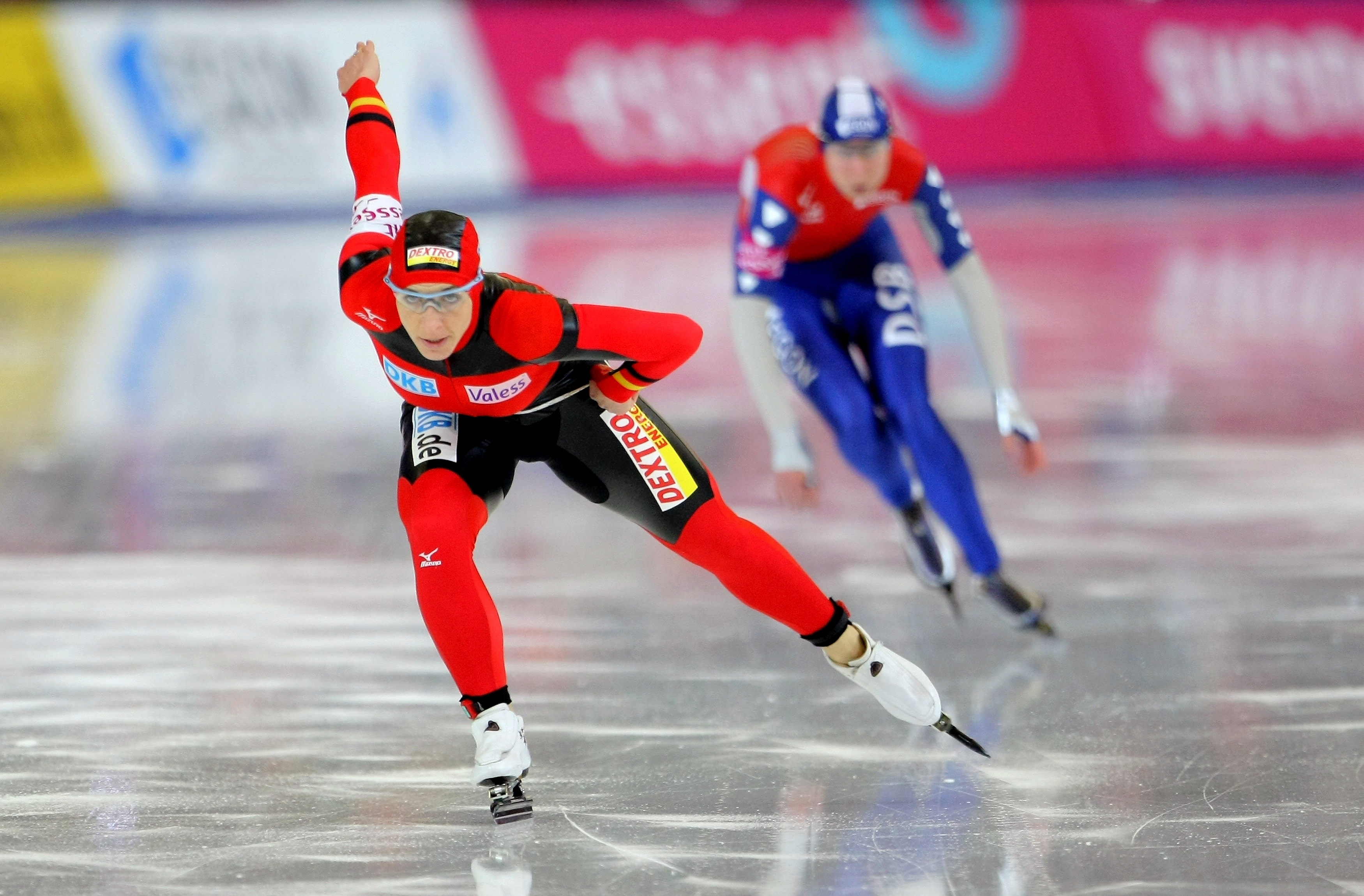
Anni Friesinger changes lanes ahead of Margot Boer during their pair in the Women's 1000m at the ISU World Single Distance Speed Skating Championships 2009 in Richmond, Canada. © Getty Images
Changing Lanes
To ensure that they cover the same distance, skaters change lanes every lap at the crossing straight, which is located opposite the finishing straight. Most lane changes are completed smoothly, with one skater crossing in front and the other passing behind.
Occasionally, two skaters are level as they approach the crossing straight. In longer-distance races, skaters often anticipate this situation as they enter the preceding corner and adjust their speed slightly to avoid interference.
The skater in the inner lane may slow down slightly to cross behind and take advantage of the draft. Alternatively, they may accelerate to create enough room to cross in front.
When the skaters are level at the crossing straight, the skater changing from the outer lane to the inner lane has the right of way. The skater coming from the inner lane must avoid interference and may be disqualified for failing to give way.
Re-Skate
In individual distances, except the Mass Start, and in Team Pursuit, the referee may allow a skater or team a fresh start, known as a re-skate.
A re-skate may be granted if the skater or team has been obstructed by another competitor or affected by another form of interference during the race.
When a re-skate is granted, the skater or team is entitled to a rest period of 30 minutes. The better time from the two races determines the final result.
False Starts
The starter calls the skaters to the start line with the command “Go to the Start”. The skaters must position themselves between the pre-start line and the starting line.
When the starter calls “Ready”, the competitors must take their starting positions behind the line and remain completely still until the starting shot is fired. They may not touch the starting line or place any part of their body or equipment on the ice beyond it.
The interval between the “Ready” command and the starting shot should be between one and 1.5 seconds.
The starter may call a false start if one or both competitors intentionally take too long to assume their starting position. A false start may also be called if a competitor moves from their mark and causes the other skater to follow, or if a competitor leaves the starting position after the “Ready” command but before the shot is fired.
Following a false start, the skaters are recalled by a second shot, a whistle from the starter or both.
The skater responsible for the first false start in a pair receives a warning. Any skater who commits a second false start in the same pair is disqualified, regardless of who was responsible for the first one.
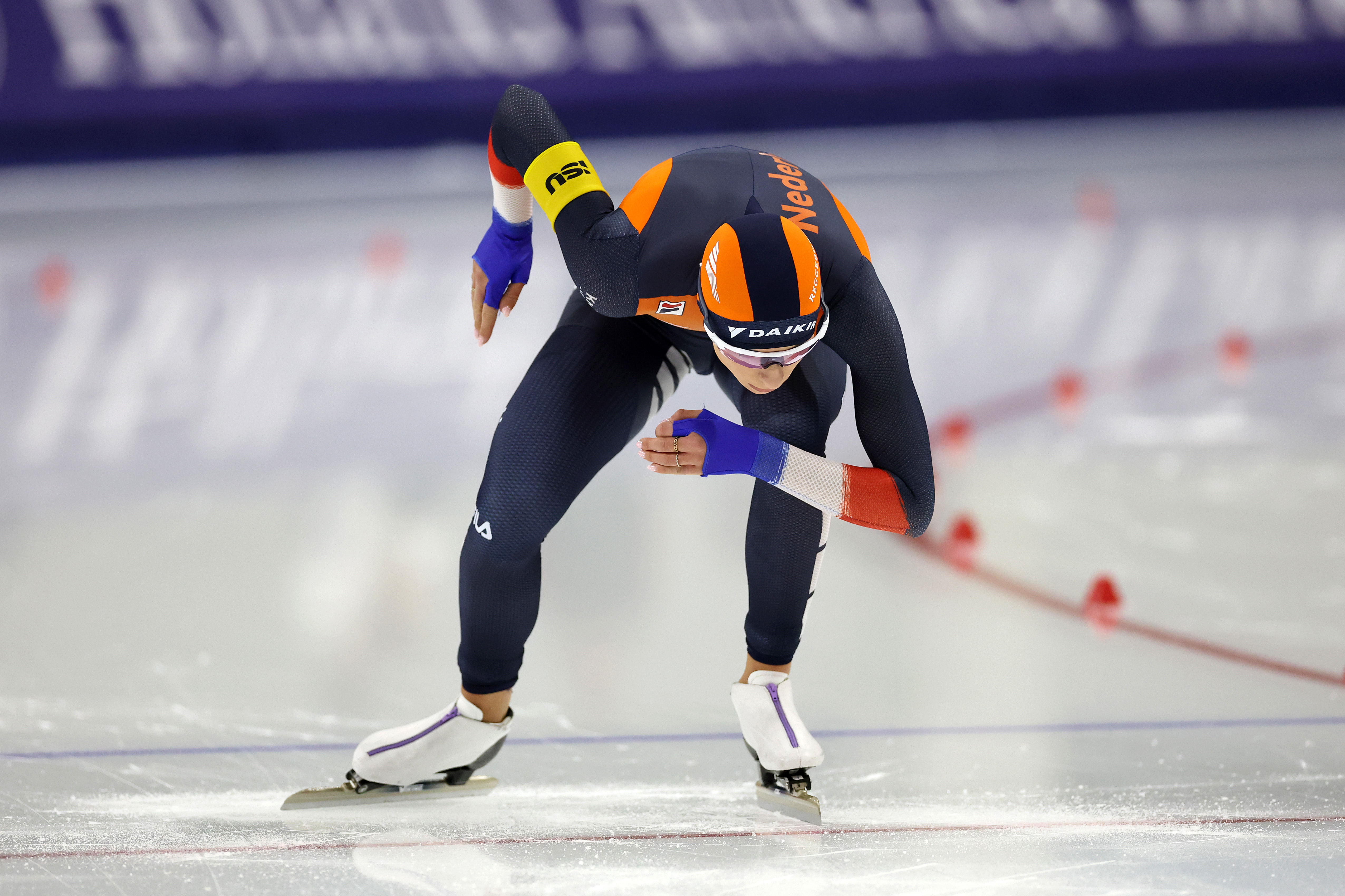
Femke Kok on the start line in women's 500m at the ISU World Cup Speed Skating in November, 2025 in Kearns, Utah © ISU
You may also like
Explained: Why Speed Skaters Change Lanes During a Race