SHORT TRACK
Kamila Sellier Back on the Ice After Eye Injury | Summer Diary
06 Aug 2026
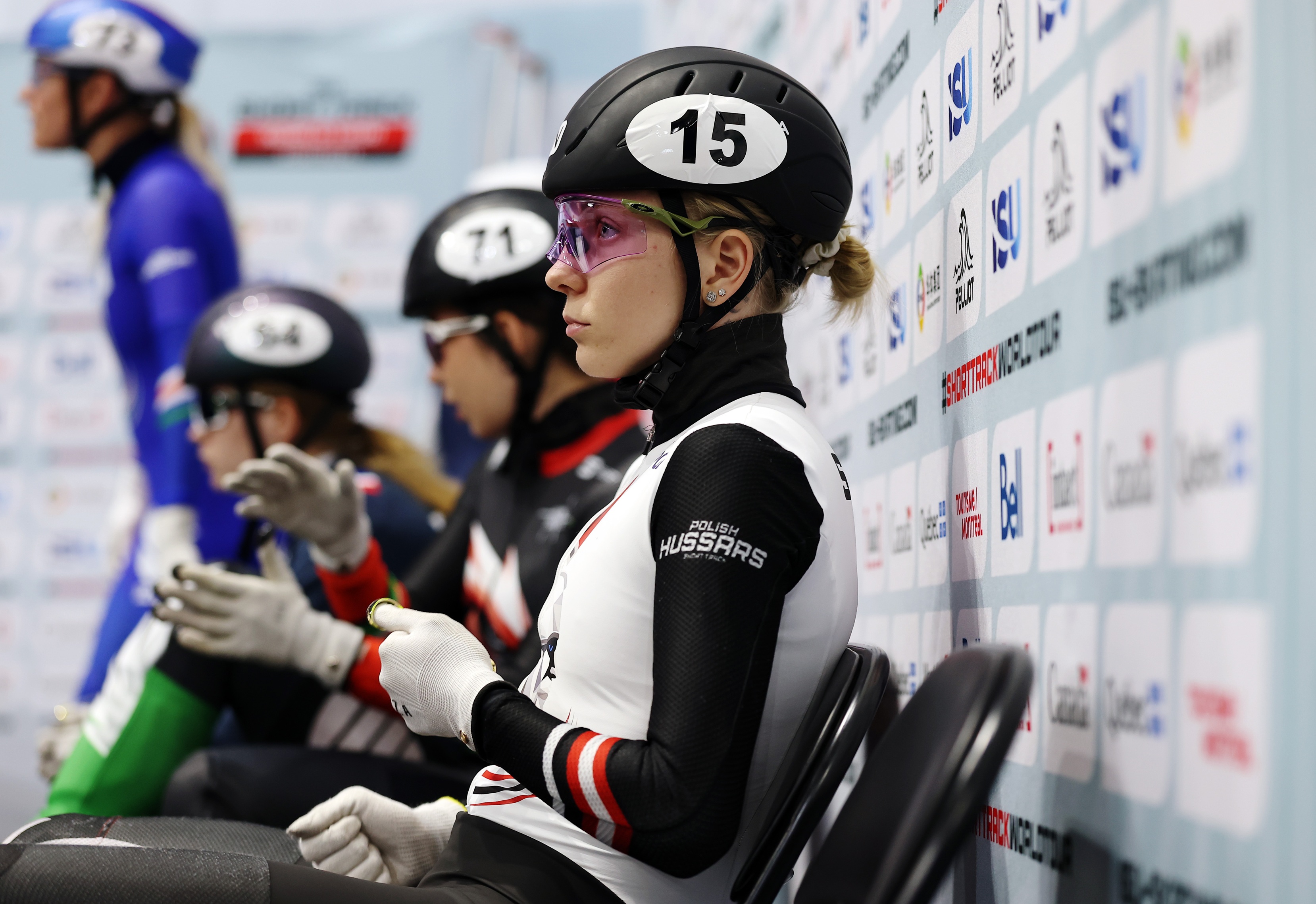
Poland’s Short Track speed skater Kamila Sellier is back on the ice after suffering a serious eye injury at the Milano Cortina 2026 Olympic Winter Games.
The 26-year-old had helped Poland to Mixed Relay silver at the 2026 ISU European Short Track Championships before a frightening crash left her needing multiple surgeries and months of rehabilitation.
Now back on the ice in Türkiye, Sellier is testing her vision and taking her first strides towards a return to competition, one lap at a time. Supported by her husband and fellow Poland skater Diane Sellier, their dog Stormi, a sports psychologist and the wider Short Track community, the 26-year-old is determined to make her comeback at the opening stop of the 2026/27 ISU Short Track World Tour in Vancouver.
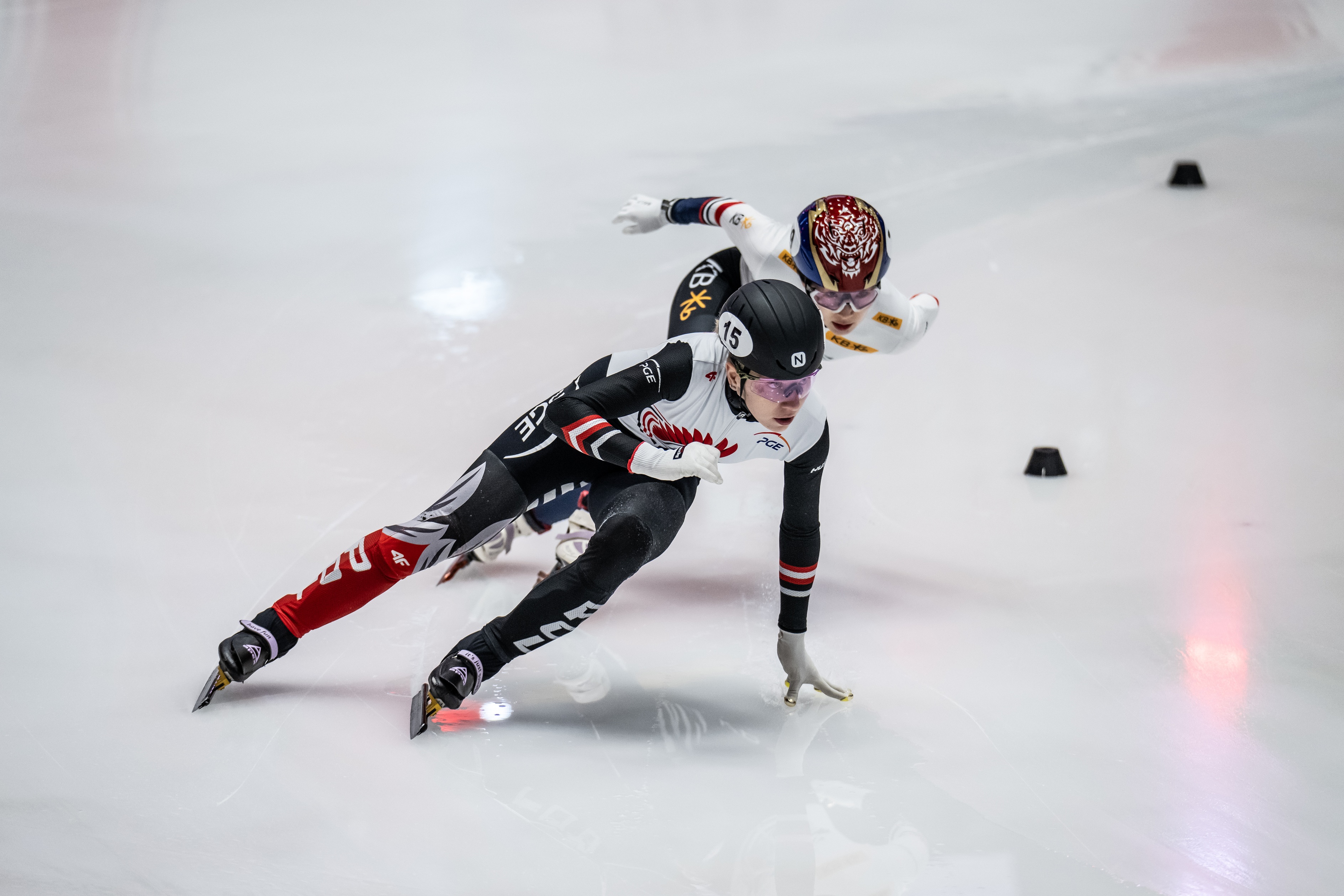
Kamila Sellier (front) and Choi Minjeong (back) compete at the ISU Short Track World Tour in Gdansk, Poland in November 2025. © ISU
European Championships: the highlight of a difficult season
“From the beginning to the end, it was a hard season for me,” she said. “All season I was wondering what was wrong with my skating. My technique wasn’t good enough.
“In Poland, when we were kids, we didn’t really have the same technical education that some other countries had. So I’m still trying to learn how to feel the blade and how to feel the ice. I’m not one of those naturally talented skaters. I’m still learning.
“I wasn’t myself this season and though I was always fighting until the end, no matter the results, it just felt strange. Normally I have good racing skills. Sometimes I’m aggressive, but in a good way. This season I lost that confidence.
“The only good point from the season was the European Championships. I started to feel a bit better there and kept fighting, even though I knew at that time I wasn’t going to the Olympics in the way I wanted.
“Of course, the Olympics were still an amazing experience. To represent your country and see all the athletes and how everything is organized is something special.”
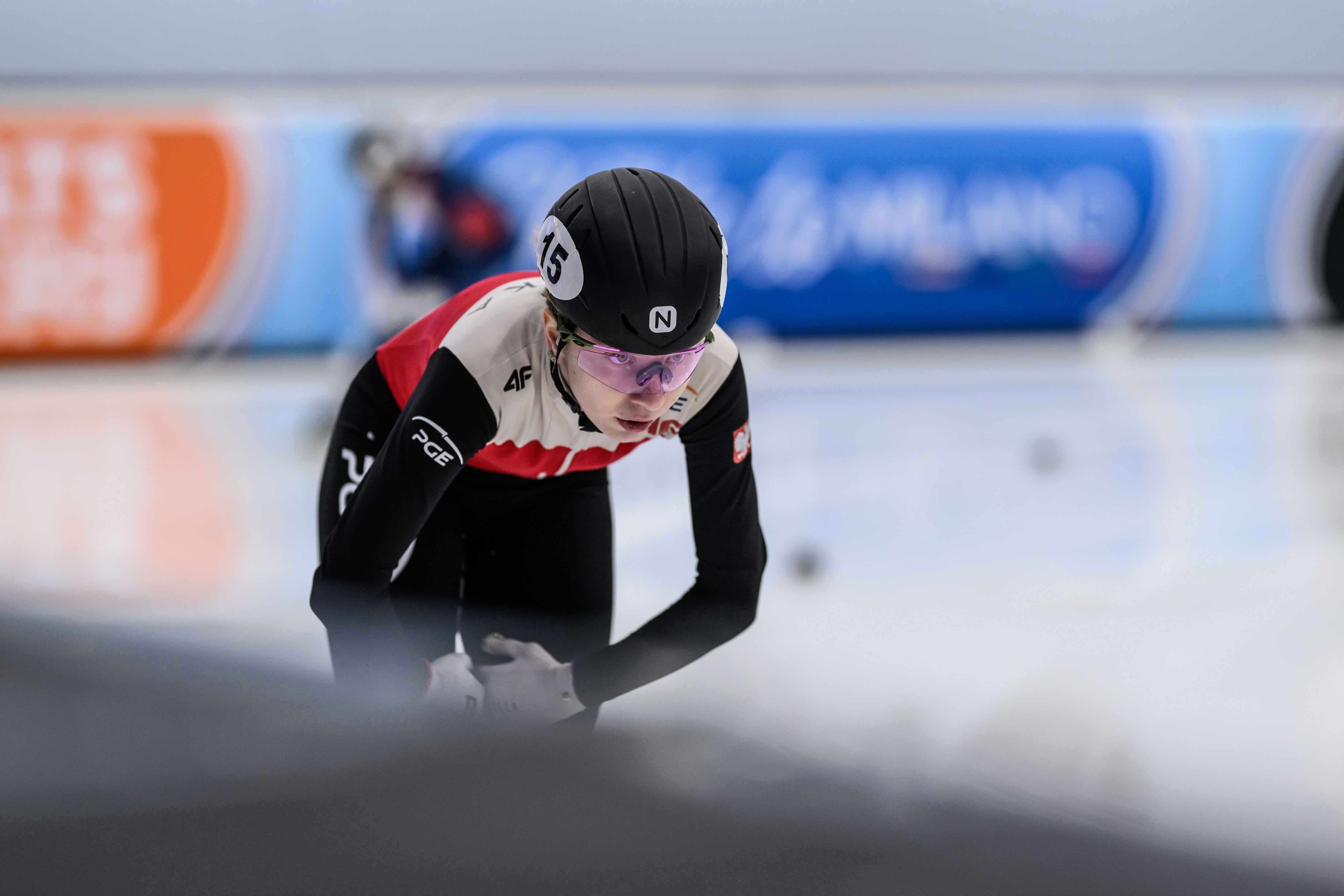
Kamila Sellier competes at the ISU Short Track Speed Skating European Championships 2026 in Tilburg, Netherlands. © ISU
Milano Cortina 2026 eye injury
“I’m grateful that I had the chance to be there but it’s quite hard now to bounce back from this. I really need to be careful with my eye, with my vision, my nervous system and my brain.
“In Milano I had the first surgery because I had three bones broken.
“Then in Poland I needed another surgery to reconstruct the orbital bone because my left eye wasn’t in the right position. They put a titanium mesh inside the bone and I’ll probably never remove it.
“My vision is improving. I can really see clearly with my left eye now, but the double vision stayed.
“Many people ask me if it’s better than two months ago. No. It’s exactly the same. The double vision when I look up is really hard to fix and, as we know, in Short Track we need to look up all the time.
“I’ve only been back on the ice for three days so I can’t say much yet. It’s not good, but it’s also not that bad. I think I can work on this and hopefully next season I will be back at competitions.
“Physically, I can handle the training. It’s my nervous system, my eyes and probably my brain that cannot handle all of the information at once. So for now it’s step by step. One lap by one lap.”
Husband Diane by her side
“My first thought after the accident was that I needed to call my husband to let him know that I was OK and alive.
“I asked for my phone straight away. I could hear through the phone that he was really stressed and traumatized. He couldn’t even say a thing.
“We’re always supporting each other and always trying to give our best for each other. Sometimes one person feels good and the other feels bad. Then you need to cheer the other one up.
“We try not to talk too much about Short Track. We don’t really have many hobbies outside of the sport, which I guess we should change a little bit. Sometimes we read books and Diane likes playing computer games.
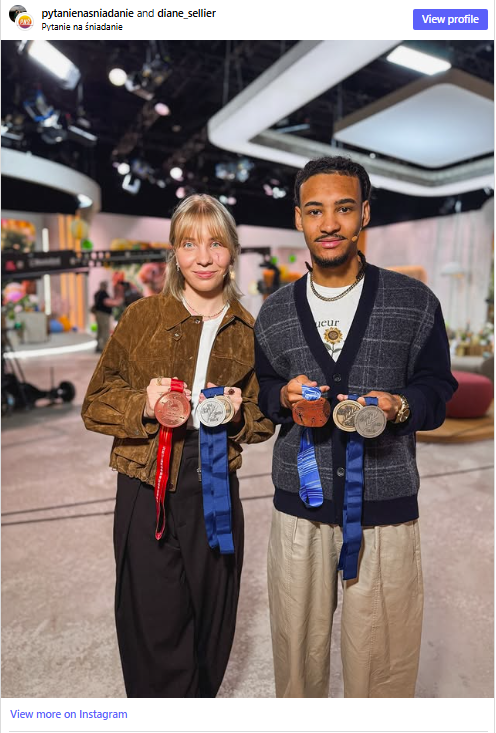
“It’s really important to have this kind of person in your life. Not only in training, but in life. Right now it’s hard for us because Diane is also trying to come back from his knee injury. Maybe now I need to take care of him a bit more than he needs to take care of me.
“We’re really compensating each other. I think it’s really important for our mental health but also our physical health.”
Support from around the world
“So many Short Track athletes reached out to me and wished me a speedy recovery. It was really nice to read all the messages. There were so many that I couldn’t answer everybody.
“There were people from Short Track, people from Poland and even celebrities sending messages.
“Selma (Poutsma, NED) sent me flowers and chocolates. Reinis (Berzins, LAT) also sent chocolates and flowers to the hospital, which was very nice.
“(Eyewear brand) Oakley contacted me directly the same night as the accident. They invited Diane and me to their headquarters in California, introduced me to someone who works with vision. For the first time, I felt like someone could actually see what I see. He gave me exercises to work on the muscles around my eye and that gave me some hope.”
Stormi the mental health support dog
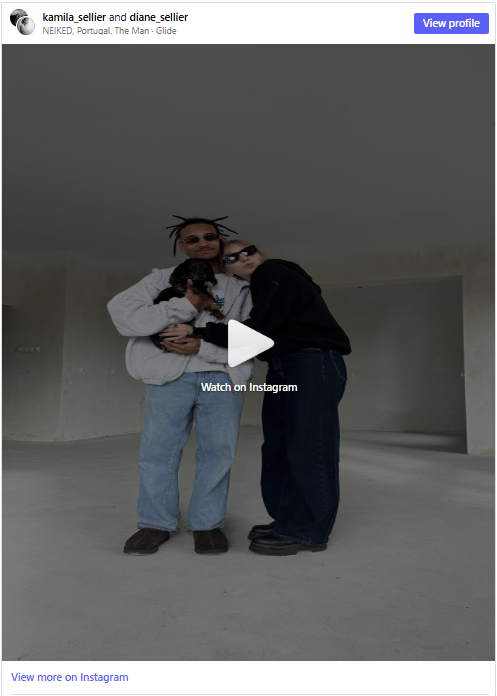
“We have a one-year-old miniature dachshund – a sausage dog – called Stormi. She’s our mental health support dog and she’s so great with us.
“When we’re not traveling too far, we try to bring her to training camps. She even came into our locker room at the World Tour event in Gdansk as my parents were there to look after her. That was amazing.
“We didn’t really have time for holidays because I’ve had doctors’ appointments almost every week and we’ve been keeping ourselves busy renovating our flat. For us, the fun plan this summer is moving into our new home.
“We still need to do our honeymoon because we didn’t manage to do it. We will maybe go to Bali again because those were the best holidays we’ve ever had. We like doing activities and Diane loves riding motorbikes, so Bali was perfect for us. Or we go somewhere new, like Thailand or the Philippines.”
Back on the ice
“I cried before my first ice session. It wasn’t really because of the accident. It was more the stress that maybe I wouldn’t be able to come back because of my vision.
“But I think I handled it pretty well. I’ve never had a situation like this in 15 years of skating, so let’s hope it’s the last one.
“I want to get back to a really good level and I want to win races again. But for now I can’t think about winning races if I don’t see properly.”
Working with a sport psychologist
“I had already started working with a psychologist before the accident because I wasn’t happy with how I was skating. We did one session before everything changed.
“After the accident we had to switch the focus completely and we started working on coming back from the injury.
“Right now I have sessions every week because I’m back on the ice. I know it can be stressful and I might panic. I need someone who can give me the tools to work with my mind.”
Looking ahead
“I’ve always wanted to have my own story in this sport. For now I’m keeping my focus on coming back on the ice. I need to be patient with the whole process.
“I’d like to get back to making good decisions (on the ice) again. Maybe after this injury I’ll come back calmer. I needed to take a step back because of my health. But it won’t last forever. I’m a positive person. I believe I’ll skate again.
“I want to improve my vision and improve my skating vision because they’re two very different things. We’ll see each other in Vancouver (for the opening stop of the 2026/27 ISU Short Track World Tour). That’s my plan. It can always change, but I really want to be there.”
You may also like:
Jens van 't Wout: Tattoos, Motorbikes, Ice Cream and Meeting the King | Summer Diary
Hanne Desmet reflects on Olympic bronze, life in Hungary and Road to Alpes 2030 | Summer Diary