




SHORT TRACK
Short Track equipment: Speed and safety from head to toe
17 Feb 2026
For more information about Short Track in the Olympic Winter Games Milano Cortina 2026, please check here
Developments in Short Track equipment have been a crucial element of making the sport faster, more exciting and safer.
The skates themselves have altered radically. Originally, racers used leather boots with blades fixed to the base. Then, a revolution happened.
“Around the early 1980s, a guy from Quebec called Raymond Laberge invented moulded boots with the blades offset,” remembers Nathalie Lambert, who won a Winter Olympic gold and two silvers and who is now the Chair of the ISU Short Track Speed Skating Technical Committee.
“He moved them to the left, which meant you could suddenly lean more into the corners, without your boot touching the ice. It revolutionized Short Track. With the old ones, you couldn’t gather much speed in the corners.”
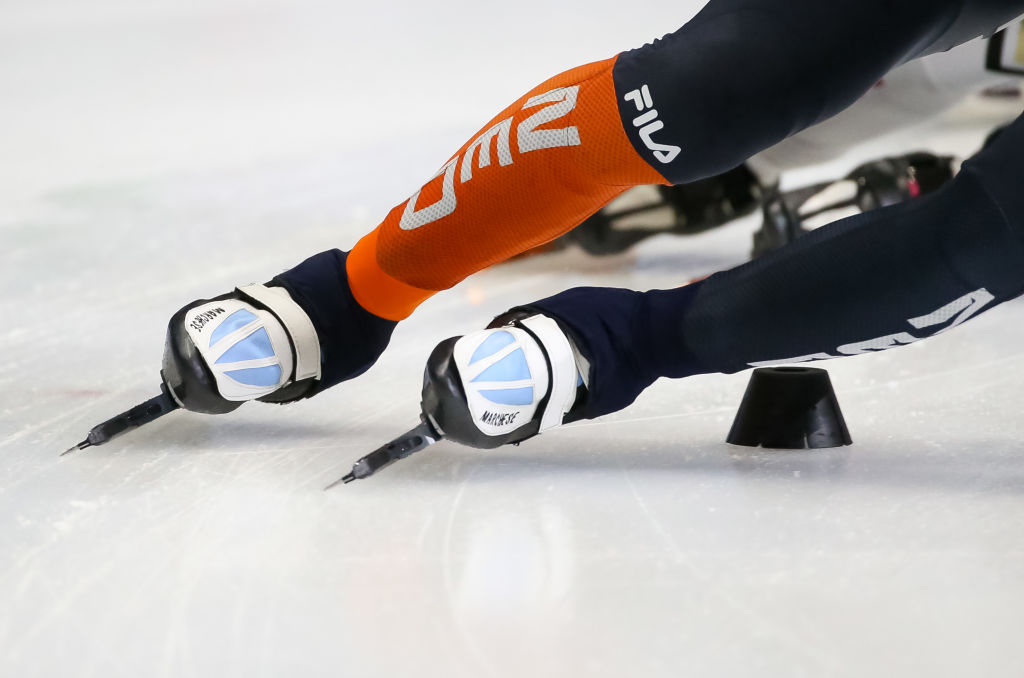 Modern Short Track boots, like Jens van 't Wout's, pictured, feature offset blades to maximise cornering angles © ISU
These new boots were moulded to the feet with fiberglass, making them stiffer and giving more control. Grip was better, and without the ankle bending, more strength could be applied.
Marginal gains
Since then, boot designs have remained largely the same – but racers still tinker to try to make marginal gains.
“Now, the blades are a little longer, a little thinner, they’ve changed the rocker on it a little bit,” says Lambert.
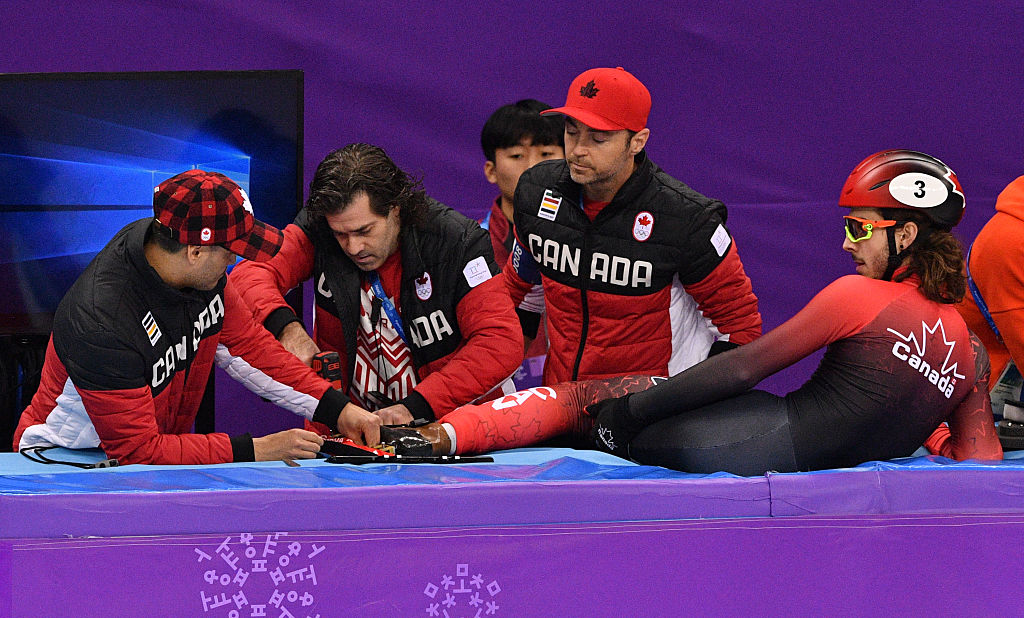 Samuel Girard's blades receive running repairs from Team Canada's technicians at the 2018 Olympic Winter Games © Getty Images
Blade specialists travel with teams now; racers have more than one pair and can micro-adjust their set up for the sharpest, most comfortable feel. That’s what you’ll see when the athletes jump onto the barrier after a false start or a crash, to get a ‘tune up’.
Suits of armor
The Short Track suit is also a world away from its original incarnation. Early versions were basically Lycra – “like a bathing suit”, Lambert jokes – but if you got cut, the consequences were serious.
Now all the major arteries are covered in Kevlar incorporated into the suits, so that can’t happen, and skaters must now also wear cut-resistant gloves, to avoid wrist and finger injuries.
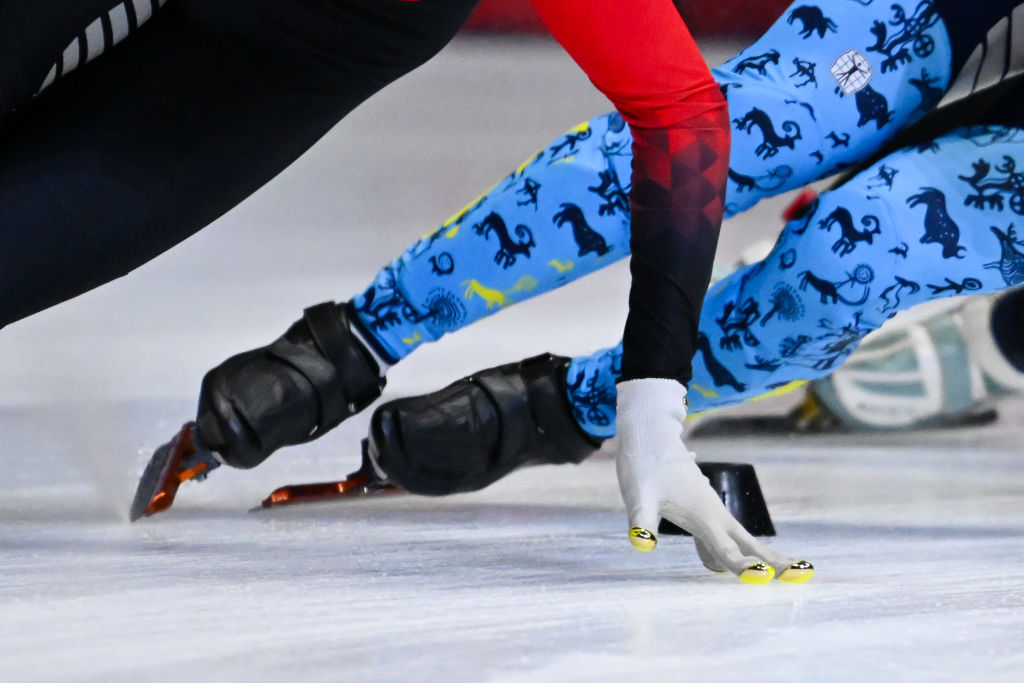 Skaters' cut-resistant gloves also feature plastic tips to reduce friction as the corner at speed © ISU
The left gloves also feature tips made of durable plastic to reduce friction when skaters' fingers touch the ice on Short Track's tight corners in order to keep their balance.
Helmets have also been revolutionized. The original versions were leather helmets with holes in. Modern versions are lighter but more protective - and also feature increasingly colorful designs. Along with effective crash barriers, it makes this exciting sport as safe as possible.


