FIGURE SKATING
Figure Skating: Everything you need to know
04 Feb 2026
For more information about Figure Skating in the Olympic Winter Games Milano Cortina 2026, please check here
If you are new to the beautiful sport of Figure Skating, here is all you need to know about this unique sport that combines athleticism and artistry like no other.
A little bit of history
Ice Skating has a long tradition. People skated on frozen lakes or rivers in ancient times on blades made of bones or wood, and later of steel. Figure Skating as a sport started to develop in the 18th century when the first Skating club was founded in Edinburgh in 1742. The first international competition was held in 1882 in Vienna, Austria, and the International Skating Union was founded 10 years later. It is the oldest winter sports federation in the World.
Figure Skating in the Modern Age
Today, the sport of Figure Skating consists of four disciplines:
- Men’s and Women’s Single Skating
- Pair Skating
- Ice Dance
- Synchronized Skating (not an Olympic sport in Milan)
Single Skaters perform jumps – singles, doubles, triples and even quadruples - spins and footwork on the ice while Pair Skaters have additional elements such as lifts and throw jumps. Ice Dancers impress with their lifts, footwork and spins, but they do not include jumps or throws into their routines. In Pair Skating and Ice Dance, a man and a woman skate together. At this time, same-sex couples are not part of ISU competitions.
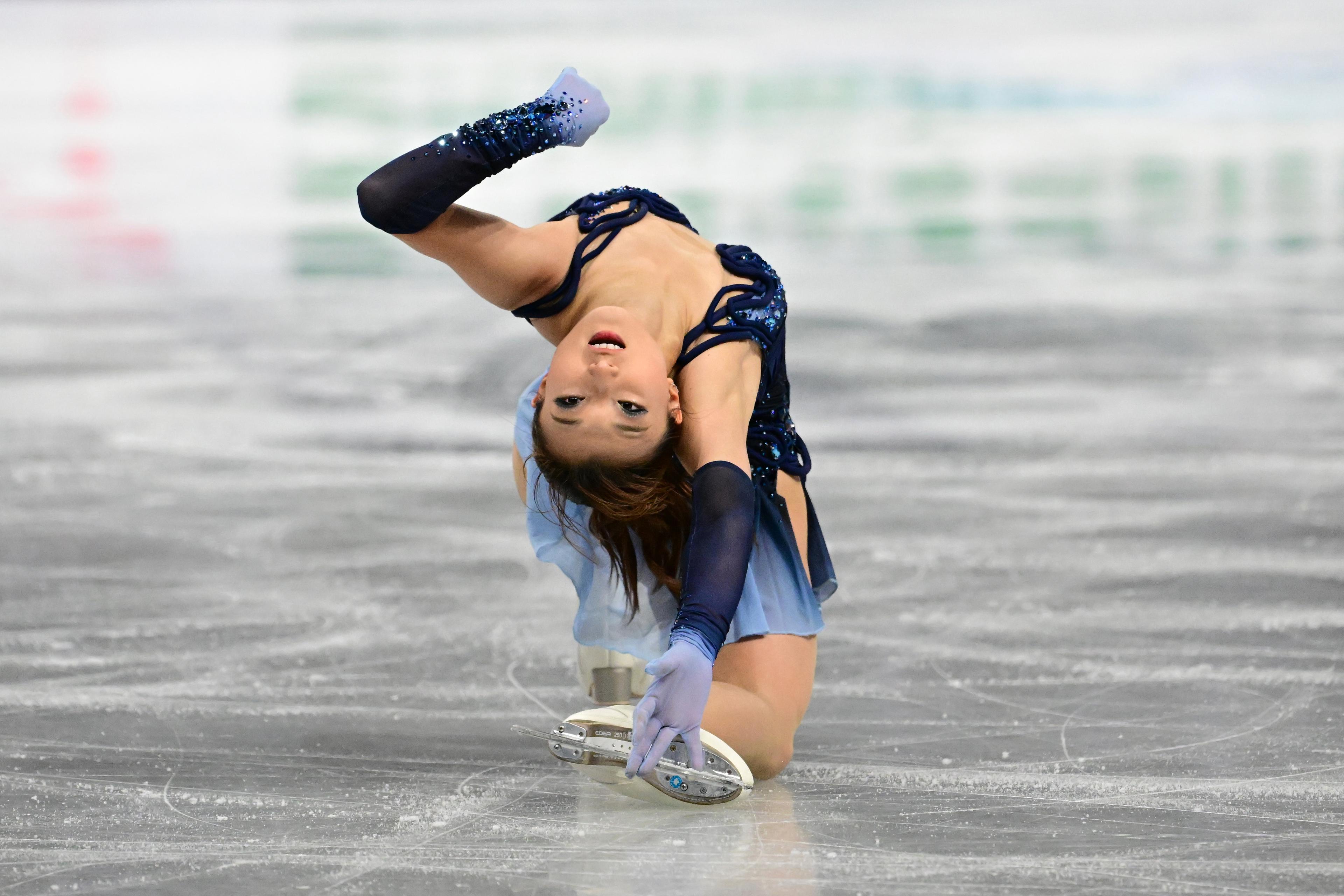
Figure skaters combine their technical skills with emotional and dynamic performances to a wide selection of music that draws you into a story on the ice. The skaters are not only athletes, but they are also dancers and performers on the ice. Figure Skating has it all.
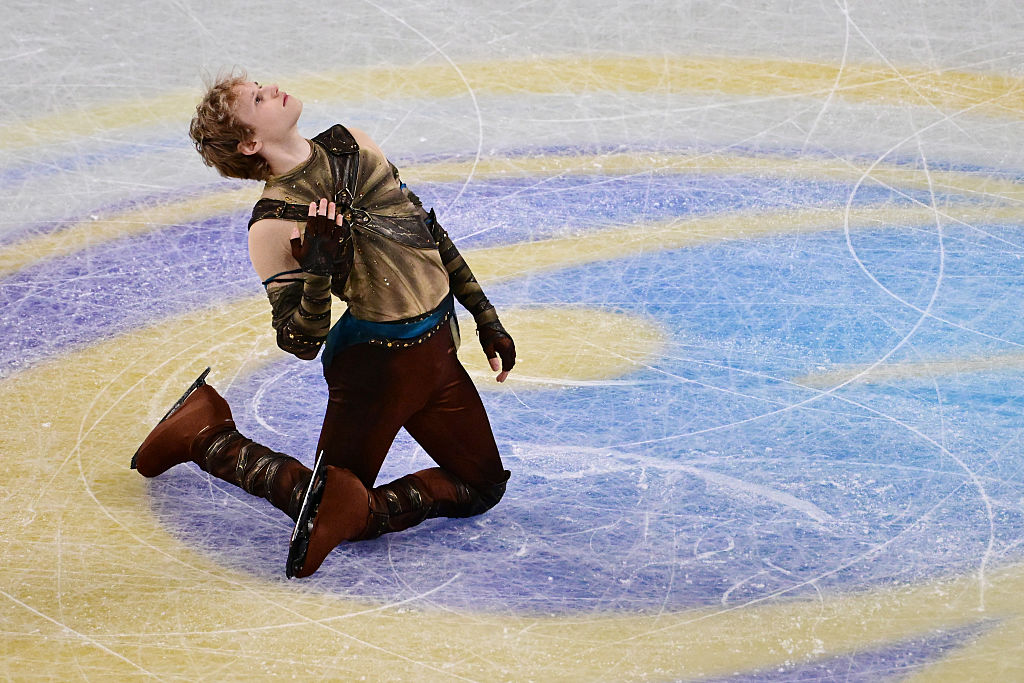
Ilia Malinin (USA) is making his Olympics debut in Milan and is tipped for success © ISU
The competition format
Skaters perform two programs in the current competition format:
- Short Program (for Singles and Pairs) or Rhythm Dance (for Ice Dance) is 2:50 minutes long
- Free Skating (for Singles and Pairs) or Free Dance (for Ice Dance) is 4:00 minutes long
The programs are skated to music. Vocal and instrumental music are permitted. The programs have different requirements to make it possible to judge the sport.
How is Figure Skating scored?
Figure Skating is a judged sport with a technical jury that assesses the elements and a panel of judges that rates the quality of these elements and the performance aspects.
- The elements (jumps, spins, throws, step sequences, lifts, etc.) have different degrees of difficulty and are worth points. Together with the points added or subtracted for the execution, they form the technical element score.
- The judges mark the execution of the elements by giving positive or negative scores. They also award the component score for the performance aspects such as speed, choreography and skating skills.
- The two scores are added and form the segment score (for the Short Program/Rhythm Dance and Free Skating/Free Dance).
- The scores of Short Program/Rhythm Dance and Free Skating/Free Dance are added up.
- The highest score wins.
- Tiebreakers are in place in the rare case there is a tie.

A judging panel will be present in Milan to score the Skaters © ISU
The Olympic Team Event
The Team Event was introduced at the Olympic Winter Games in 2014.
- Ten teams qualify based on results from the season and the ISU World Championships of the previous season.
- The top five teams after the Short Program/Rhythm Dance advance to the final round with the Free Skating/Free Dance.
- The skaters get points according to their placements: 10 points for first place, 9 points for second place, etc.
- Each team consists of a woman, a man, a Pair Skating team and an Ice Dance couple.
- Only the skaters that are qualified for the individual event can compete, but up to five skaters can be included to fill up incomplete teams. They compete only in the team event.
- If a country has more than one entry in the individual competition, they can switch up to two skaters/couples between Short Program/Rhythm Dance and Free Skating/Free Dance.
A fan guide
Figure skating fans are very creative and bring banners and flags to support their favorites.
- It is perfectly fine to applaud and cheer during the program.
- Fans show their appreciation to the Skaters by throwing soft toys, wrapped flowers and other gifts onto the ice after the end of the performance.